Help Brushwood close the final gap on ACTIVATE: A Campaign for Investment in Community

Suicide Prevention: An Ecosystem for Staying

By Ashley Cullen-Williams, LPC

Please Note: This post discusses suicide. If you or someone you know is feeling overwhelmed, experiencing a mental health or substance use crisis, or having thoughts of suicide, call or text 988. No matter the situation, a trained Crisis Worker will listen, offer support, and help you navigate what comes next.

If you are exhausted, grieving, isolated, or overwhelmed, someone may have told you to “stay” as though staying were simple. But when you are carrying more pain than you know how to name, staying can feel like work. 

September is Suicide Prevention Month

It is a time to talk about what many people have learned to carry quietly, and to remember that no one should have to carry it alone. 

As a counselor, I have spent a lot of time thinking about what it means to ask someone to stay. Those words matter, but they are not a complete plan. Staying becomes more possible when someone has support, safety, and a reason to believe that the present moment is not the whole story. 

Brushwood pointed me to nature. That’s the reason I keep thinking about the forest. 

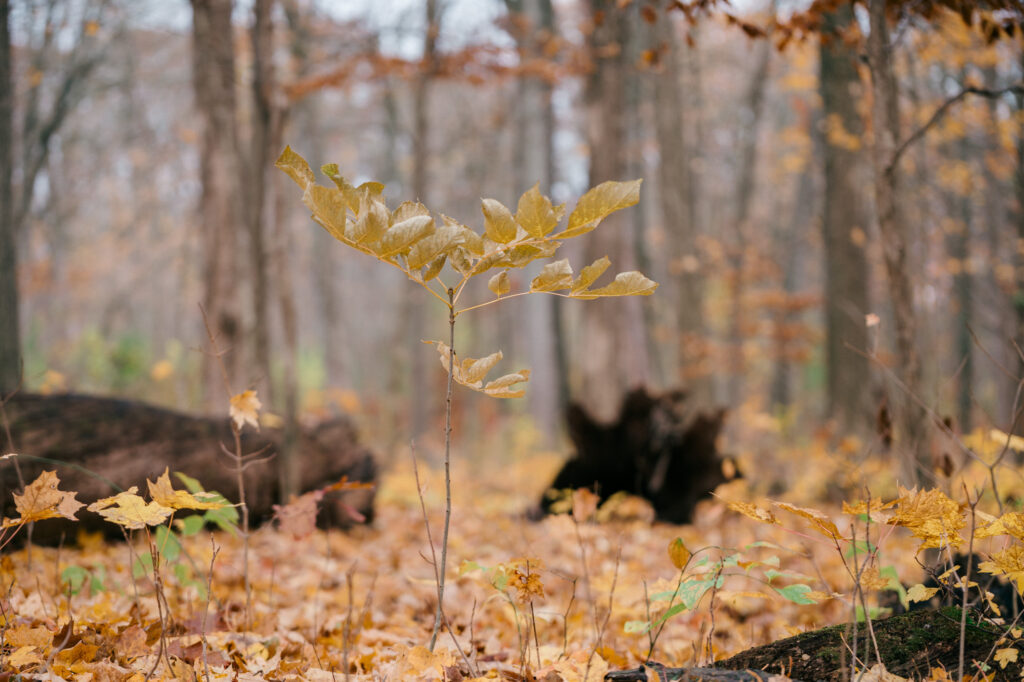
The forest knows difficult seasons. Trees lose their leaves. Branches break. Storms uproot what has stood for decades. There are months when the landscape looks empty, still, or lifeless. But the forest does not confuse a hard season with the end of a story. 

Beneath the soil, roots remain connected. 

Seeds wait. Fungi carry nutrients. Fallen trees become shelter and nourishment for something else. What we cannot see is often still working to keep something alive. 

People need that kind of ecosystem too. 
When Connection Feels Impossible 

We often tell people who are struggling to reach out. Reaching out matters, but there are moments when even that feels impossible. You may not have the words, may not want to explain, or may not be ready to tell another person everything happening inside you. 

The first connection does not have to begin with a conversation. It might begin by going outside. 

Put your feet on the ground and notice that the earth is holding your weight without asking you to explain why you are heavy. Notice a tree and place your hand against its bark. Explore its texture, temperature, and places where it has been damaged yet continue growing. 

Take a slow walk and notice five living things. 

Sit long enough to hear what you normally walk past- the wind, birds, insects, leaves, water, distant traffic, or your own breathing. 

Study a leaf, stone, pinecone or stick and let curiosity draw your attention beyond the thoughts demanding it. 

When your mind feels loud ask:

What can I see, hear, or feel right now?

Where am I holding tension?

What  would make the ten minutes safer?

Who or what could support my next move?

The goal is not to solve your whole life beneath a tree. It is to become grounded enough to take the next safe step. 

Let Nature Hold You for a Moment

Nature does not require you to perform wellness. 

The tree does not need you to be inspirational. 

The trail does not ask whether you have been productive. 

You can simply arrive and be. 

Nature can offer grounding, quiet, movement and perspective, but we should not romanticize it. 

A walk cannot fix everything. 

Sometimes we need a counselor, medication, crisis support, community, rest, food, housing, advocacy and someone willing to sit besides us through the worst part of a moment.

The forest reminds us that nothing survives entirely on its own. 

Roots connect underground. 

Trees share space. 

Water moves through systems. 

An ecosystem participates in keeping life going. 

Maybe we were never meant to carry everything alone. 
What Prevention Can Look Like

Suicide prevention is not one conversation, hotline, or perfect response. It is the daily work of creating conditions where people feel seen, supported, and safe. 

It can look like:

  • Asking directly, “Are you thinking about suicide?” Asking does not plant the idea; it creates an opportunity for honesty 
  • Listening without rushing to fix, minimize, debate or offer quick reassurance. 
  • Taking someone seriously when they say they are struggling, even if they laugh, change the subject or say they are “fine.”
  • Staying with someone who may be in immediate danger and helping reduce access to firearms, medications, weapons, or other lethal means. 
  • Connecting someone with a counselor, doctor, crisis team, trusted family member, or other qualified support. 
  • Learning warning signs, including hopelessness, feeling like a burden, withdrawal, sudden changes in mood or behavior, giving away possessions, saying goodbye, or talking about death. 
  • Creating spaces where people can discuss grief, trauma, identity, loneliness, substance use, financial stress, and other sources of pain without shame. 
  • Making practical support easier to access, including transportation, food, housing, health care, childcare, and community resources. 
  • Talking about mental health before there is a crisis and replacing judgment with curiosity. 

Protection is built through connection: when people know who to call,where they can go, and what will happen next. 

It is built when we make room for honesty before someone reaches a breaking point and we stop treating survival as an individual responsibility. 

A Personal Note on History

There is a saying in Black communities: “Black people don’t hang themselves from trees.” 

I want to be clear that I share this as my own reflection, not as position of Brushwood Center or as as statement about how Black people die by suicide. 

For me, the saying reflects a historical mistrust of official accounts of Black death and the reality that racial violence has shaped how Black communities understand safety, death, and even our relationship with the outdoors. That history influences questions I carry, even as I understand as a counselor that Balck people can and do experience suicide at alarming rates. 

I include this because healing in nature does not require us to separate ourselves from history. We can acknowledge what the land has held while still creating new experiences of safety, connection, and restoration within it. 

Before You Leave the Woods 

Maybe the forest does not need to teach us how to survive. 

Maybe we already know too much about surviving. 

Maybe it can teach us something about living. 

About resting without earning it. 

About changing with the seasons. 

About letting something fall away without believing everything is lost. 

About allowing ourselves to experience joy even when there are parts of our story that still hurt. 

And for the Veterans walking with us, maybe there is another lesson here: you are allowed to be okay. You are allowed to laugh, create, rest, explore, build new relationships, and discover who you are beyond what you have endured. Being okay does not erase what happened, dishonor who or what you lost, or make your service mean less. 

For all of us, there will be seasons when staying feels heavier than others. In those seasons, I hope you remember what the forest shows us every day: life does not have to look the way it used to in order to still be life. 

Stay. Rest. Reach. Create. Grow. And give yourself permission to see what comes next. 
Grounded Connections in Nature

Radical Hope in the Woods

Radical Hope in the Woods is a restorative, community-centered experience designed to reconnect the Black community to the land, to one another, and to the wisdom within. This event series invites participants to slow down, breathe deeply, and remember that healing is both personal and collective.

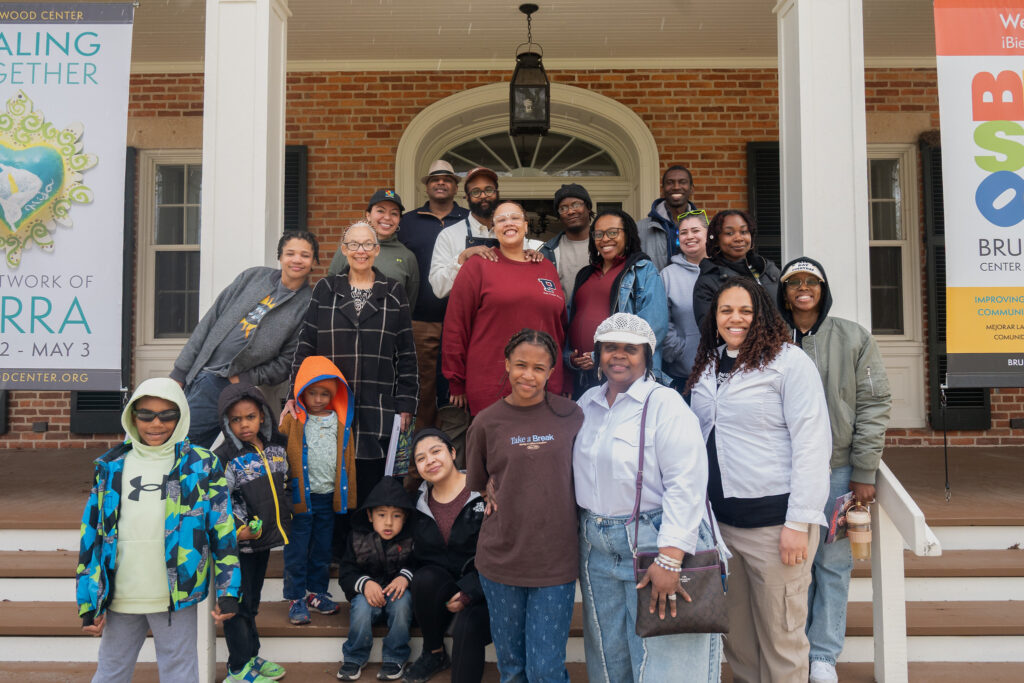
A group of smiling people on the steps of Brushwood Center at Ryerson Woods.

Developed and led by Ashley Cullen-Williams, Brushwood Center Senior Program Director, the event series premiered in the spring of 2026. The experience was woven like a quilt of memory. It featured virtual healing circles, folklore storytelling, and mindful walks that echoed the footsteps of the enslaved ancestors who moved through dense forests under moonlight, guided by stars, spirit, and unshakable will to be free.

“Through the honoring of slave narratives, freedom songs, and oral traditions passed hand to hand and voice to voice, the project bridged past and present- blending ancestral knowledge with contemporary practices of mindfulness and creative expression,” Ashley explains.

Participants gathered both online and beneath open skies to not only remember, but to feel: to sit with the land, honoring ancestral resilience, tending to generational wounds and reclaiming the outdoors as sacred ground for rest, remembrance, and radical hope.

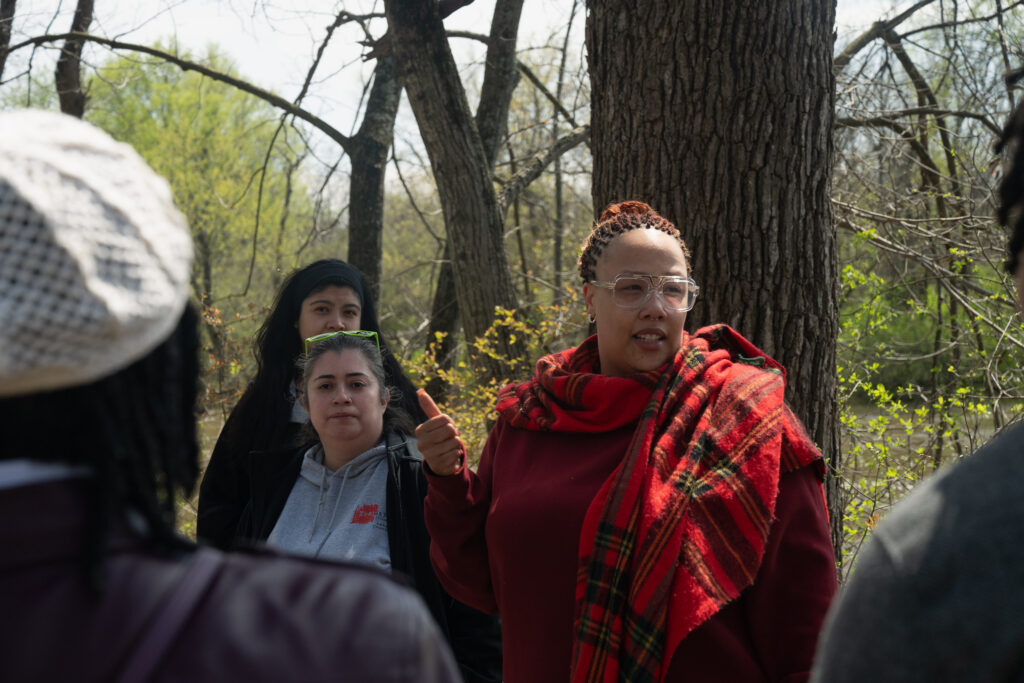
Ashley Cullen-Williams leads the group in the woods.
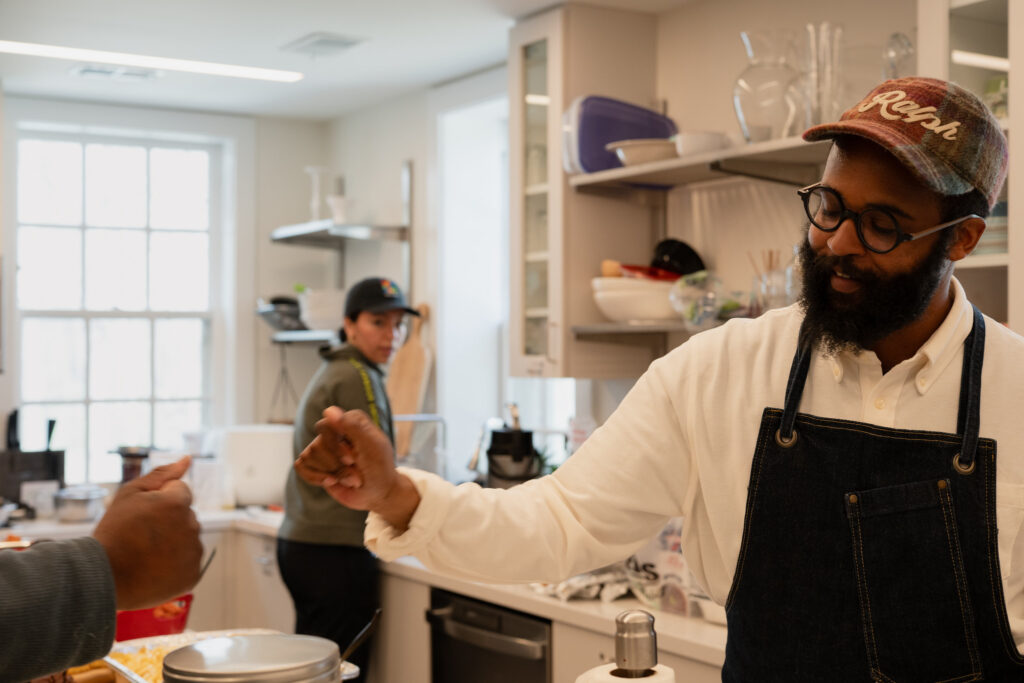
Chef Jeffrey Williams in the kitchen at Brushwood, fist-bumping a participant.
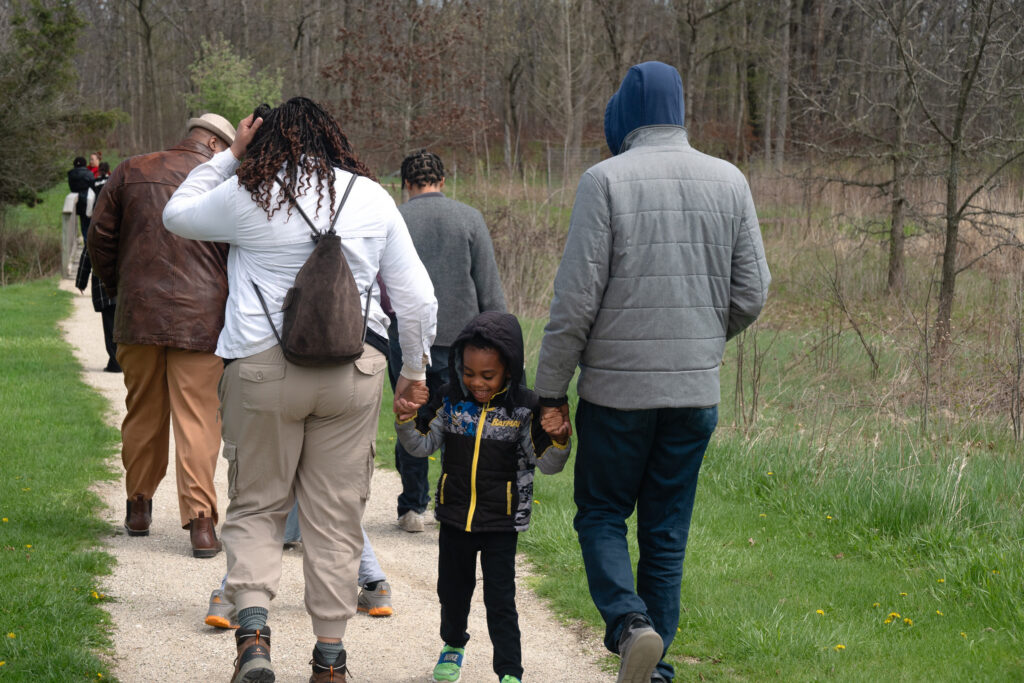
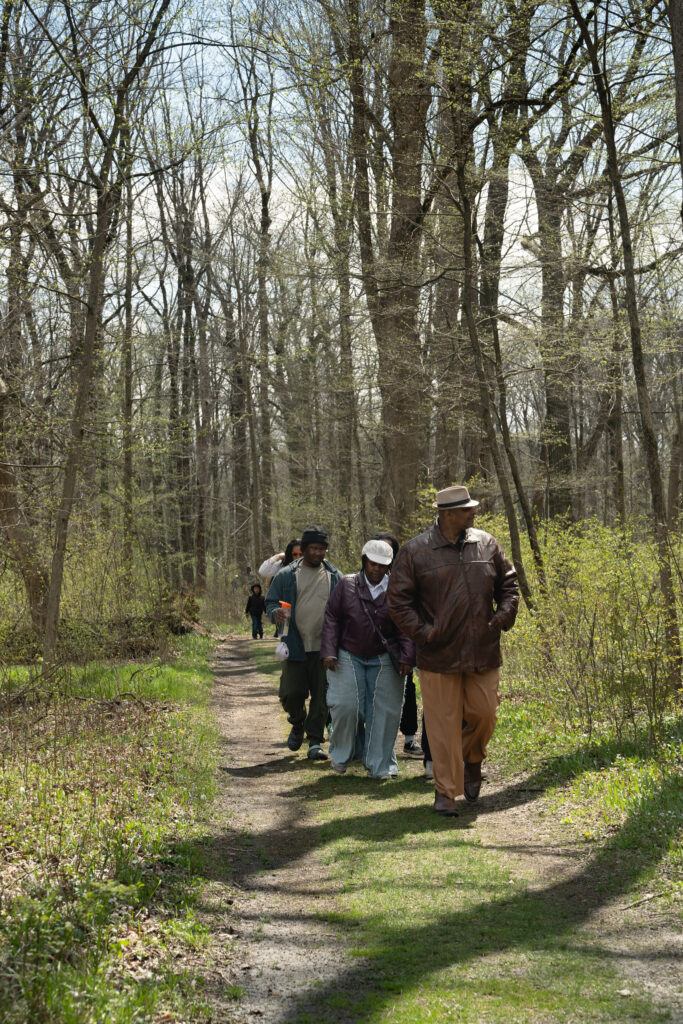
The group hikes at Ryerson Woods. A young child walks backwards between two adults.
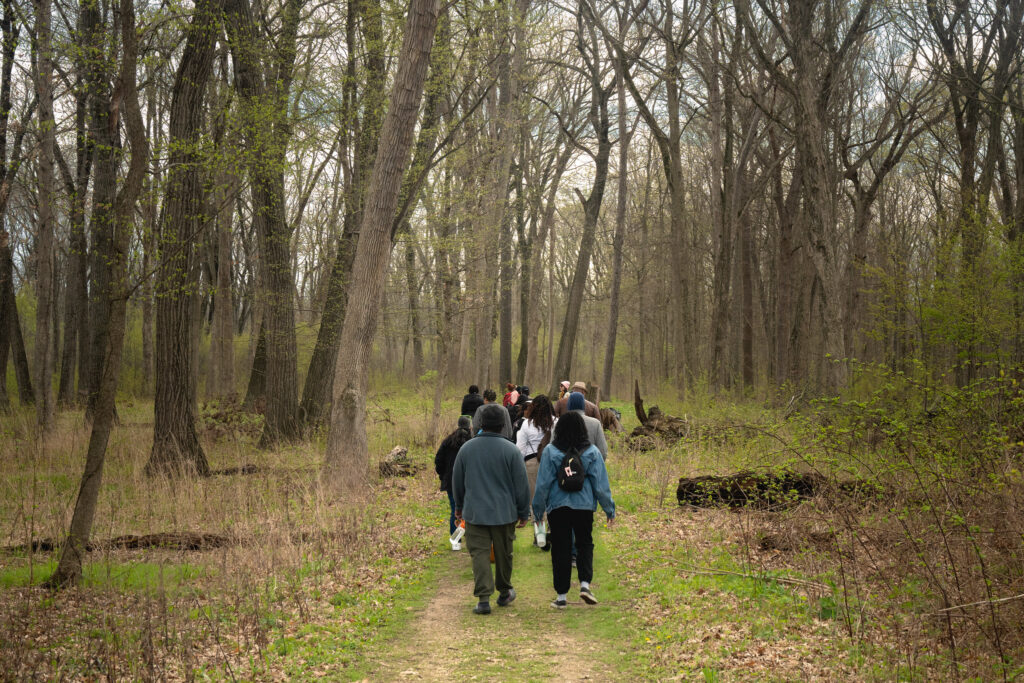
The group walks into Ryerson Woods in early spring.

“I wanted to bring more Black people outdoors- not just to visit, but to remember,” Ashley shared. “To rebuild our relationship with nature as something that has always been ours. Historically, the woods have held stories of fear- of being hunted, of running, of surviving. But those same woods also held strategy, protection, and possibility. At Brushwood, I was invited- pushed even- to step outside, to slow down, to regulate, to listen deeply. And in that listening, I was reminded that this connection belongs to me. It has always belonged to us.”

The group hikes in the woods together.

Radical Hope in the Woods is supported by Healing Illinois. Healing Illinois is a racial healing initiative of the Illinois Department of Human Services (IDHS) and the Field Foundation of Illinois.

NEW VIDEO

Nurturing Mental Health: The Power of Nature and the Arts

Nature and the arts are powerful contributors to your wellbeing.

Did you know that 1 in 5 adults in the US experience a mental health condition? The most common include anxiety, depression, trauma, and substance use disorders. Mental wellbeing is complex, but nature and the arts can play an important role in nurturing your mental health. Spending time in nature and creating art can reduce stress, anxiety, and depression, improve mood, and enhance positive emotions.

At Brushwood Center, we strive to improve access to nature and the arts, so that everyone can experience these benefits.

The Arts and Nature: Bringing Joy, Supporting Mental Health

By Megan Donahue

Picture a wash of blue watercolor paint spreading across a piece of thick paper. Imagine dipping your brush into a lush green, and layering the transparent color on top of the blue. It’s a sunny day, and the wind blows gently through the trees around you as you sit outside with your easel. You don’t have a goal, or any time pressure, or any assignment to make it “good” or “artistic.” It’s just you, the sun, the air, and the paint, exploring the possibilities.

How would that feel? Relaxing? Calm? Exciting?

Spending time in nature and experiencing the arts can influence your mood, emotions, and mental state, having a big impact on your overall wellbeing. The arts and nature bring joy to our lives, and they’re strong positive influences on our mental health.

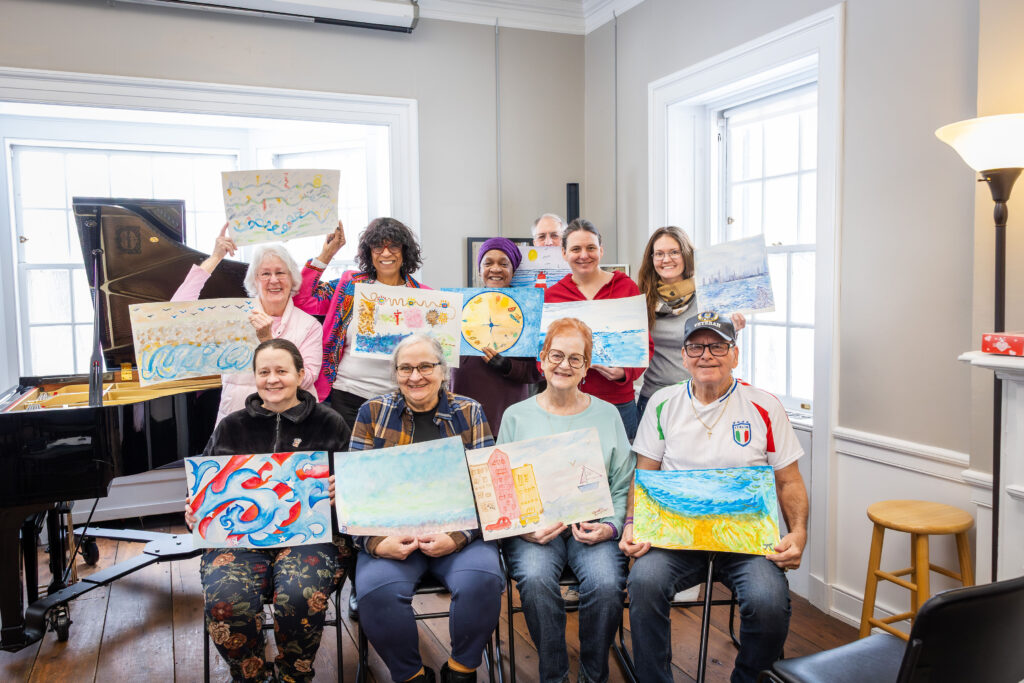
Veteran and Military Community Artists display their work at Water(color) for the Soul: Music of Lake Michigan


Mental Health Matters


1 in 5 adults in the US will experience a mental health condition in any given year, with anxiety disorders being
the most common, followed by substance use disorders, depressive disorders, and post-traumatic stress disorders.

Whether or not you experience mental illness, taking care of your mental health is important. Mental stress takes a toll on your physical health. Chronic stress is correlated with a myriad of negative physical outcomes, including digestive problems, heart disease, sleep issues, high blood pressure, and muscle tension.

Research continues to show that participating in the arts and spending time in nature can positively impact mental health. The time you spend outside, making, and/or viewing art is more than pleasant pass-time or distraction. It’s an important way to take care of your mental health.

Art is a Mental Health Asset

Making art, or even simply looking at it, can impact the brain. Increased levels of serotonin and more blood flow
to the pleasure-associated part of the brain are just some of the mental health benefits of art. Art is one of the ways
we find meaning in our lives, express and process emotion, and connect with each other.

Art has been a part of Jerry Loza’s life as long as he can remember. As a child, he had natural drawing talent and he continued to draw throughout his life. “Even in the Marines, I was making drawings for guys,” he says.

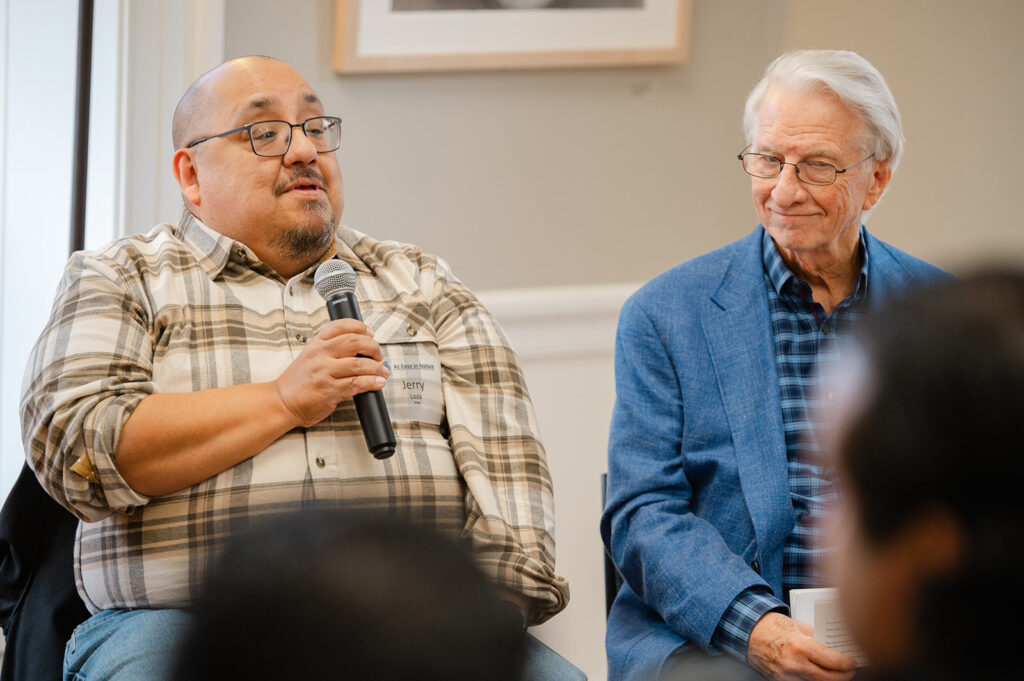
Two men sit at the front of the Great Room at Brushwood center. Jerry Loza holds a microphone.
Veteran artists Jerry Loza and Michael Lewis on the At Ease in Nature opening reception panel, November 2025.

Drawing has become part of his mental wellness practice. “When I need to get away from reality, I can 100% focus
on my drawing,” he says. A digital artist, he draws using an app on his phone, whenever he needs to decompress and
manage stress. (You may recognize Jerry’s work from At Ease in Nature at Brushwood, where he’s exhibited his art with other Veterans and members of the Military community.)

Jerry served in the U.S. Marines from 1984-1988. “Joining the military was a hundred percent the right choice for
me. It was a great experience,” he says. “But as life progressed, things got heavier and messier, and I wasn’t dealing with anything. I was just filing it all away…I did this for many, many, many years until it was coming apart at
the seams.”

Jerry’s mental health was affecting his day-to-day life. “It was starting to trickle out,” he says. “I was getting short-
tempered. I was getting irate. I was not my usual self, even when I was my usual self. It was a thin veneer. It was
very obvious that it wasn’t the real me. I was just pretending.”

The breaking point came when Jerry’s boss directly asked him if he was okay. “And that was it. I shattered,” he says.
“It was just the most embarrassing in a way, but the most enlightening thing that I’ve ever been through because
right then and there I knew, okay, that’s it. I’m not okay.”

That conversation led to Jerry beginning a journey to improved mental health, which included talking to a
therapist, and sharing about his experiences with friends and family.

Art is also part of the healing journey. “I met the Veteran Art Tribe. They are just a phenomenal group. I had no idea this was even a thing. We were able to communicate and talk about pain, and everything else, and dealing with it through art.”


Addressing his mental health has improved Jerry’s life tremendously, as a person and an artist. “There’s so much more to my drawings in the past year. I leveled up, absolutely leveled up. I went much more in depth. I put more of myself into the paintings, because I’ve learned a lot about myself in the past year. I’ve learned more about meditation and calming myself and about dealing with anxiety and helping others deal with anxiety. I’ve learned a lot about myself and most of it I’m pretty content with. I am back, I’m me again.”

Nature Nurtures

The evidence continues to mount: nature experience is associated with psychological wellbeing. Time spent in nature promotes positive social interactions, happiness and sense of wellbeing, improved memory and attention, and decreases mental distress. Nature experiences are also associated with a reduction of risk factors and burden of some types of mental illness.

Sunlight, fresh air, and other experiences in nature can make a real difference in how you feel. A 2016 study
found that, “Natural elements and sunlight exposure related positively to job satisfaction and organizational commitment, and negatively to depressed mood and anxiety…Natural elements buffered the relationship between role stressors and job satisfaction, depressed mood, and anxiety.”

These mental health benefits are particularly important for young people, as mental health problems are
dramatically on the rise in children and teenagers. Elisa Cisernos, Senior Therapist at Lake County Health Department & Community Health Center, Child and Adolescent Behavioral Services, has seen this in action by partnering with Brushwood Center’s It’s A. W.I.N. program for youth. “In therapy, we try to talk about the importance of nature and art, but there’s only so far talking can get you until we bring kids to actually experience those things and practice what we talk about in therapy,” she says, “That’s where the true magic and power is. Coming to Brushwood is one of few times
where I actually see kids allow themselves to slow down with nature.”

Connect with Art and Nature

You don’t have to spend a lot of money or travel very far to get mental health benefits from making art or exploring nature. Sitting quietly on the lakeshore, taking a walk through the snow, playing an instrument, or coloring in a coloring book can get you started. When you think about taking care of your health, include your mind by giving yourself time outside and time with art.

This article originally appeared in Thrive, Brushwood Center’s print newsletter.