Support the Joyful Impact Challenge Match by May 31st

Happy Earth Day!

Earth Day Interview with Jess Rodriguez

By Healthcare Foundation of Northern Lake County

Our partners at the Healthcare Foundation of Northern Lake County recently featured an interview with Jess Rodriguez, Brushwood’s Coalition Building Manager, in their newsletter. That interview is republished with permission below. Thanks to the HFNLC for their collaboration!

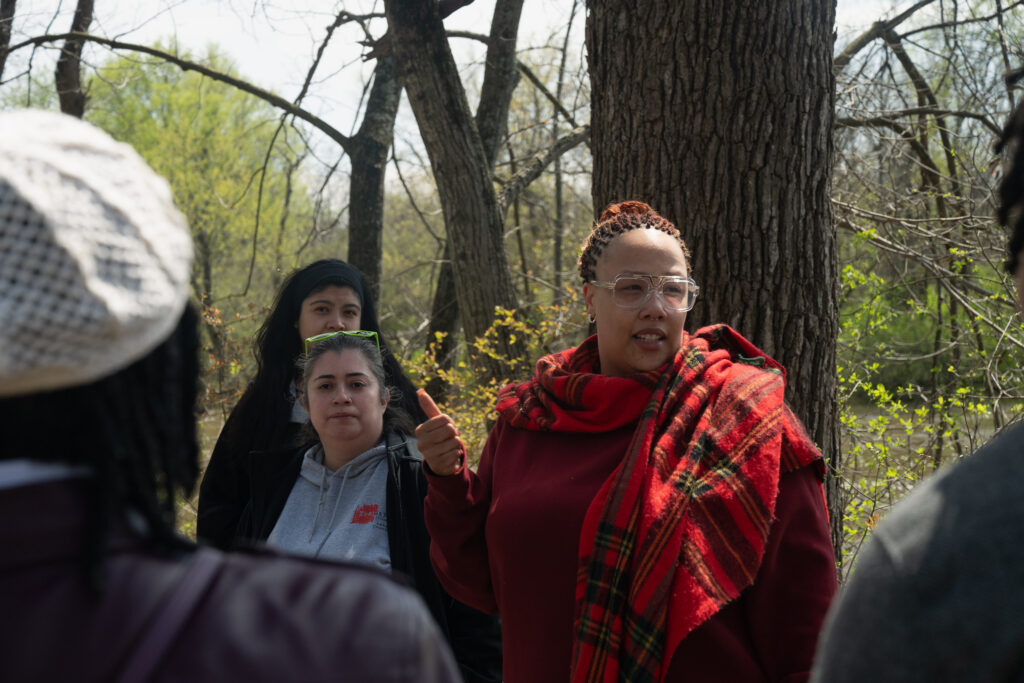
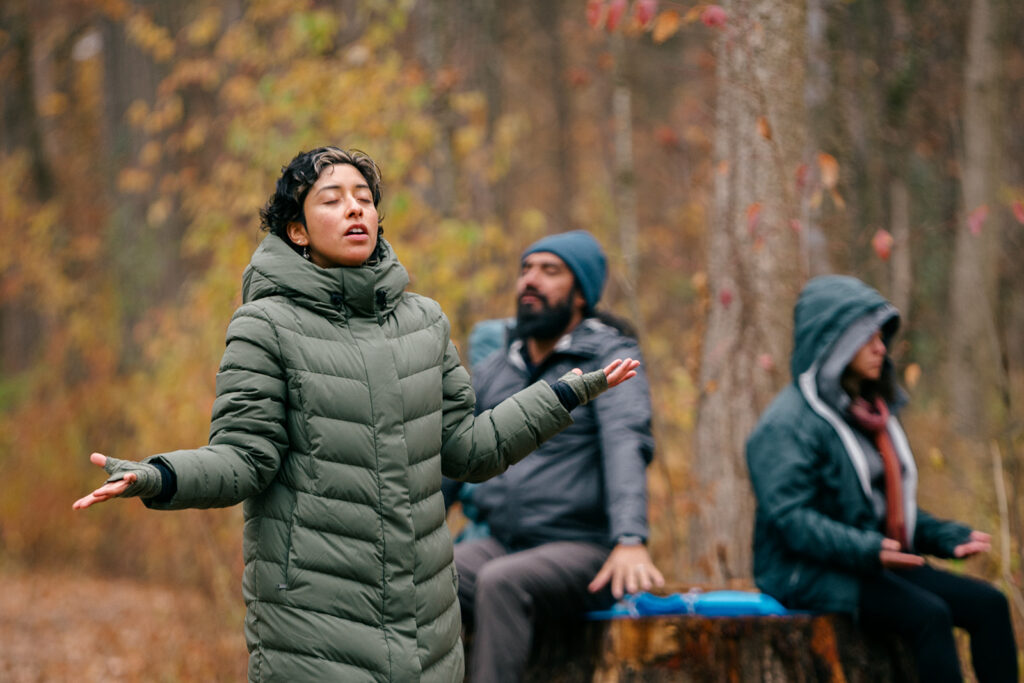
Jess Rodriguez leads forest bathing at Ryerson Woods. Their arms are extended, palms up, and their eyes are closed.

What brought you to your current work, or why did you feel the need to get involved?

I have always been drawn to nature. It has always called to me. I have been fortunate to have so many experiences, both for myself and with others, where being in nature has allowed us to unravel. To return to our own natural rhythms. Previous to my work at Brushwood, I was a horticulturist at the Chicago Botanic Garden. There, I noticed how my own mind and heart were able to sync up with nature’s way of knowing. I was able to see myself through the eyes of the trees, be called by the birds, and sing the songs of the flowers. I felt so alive and part of something much bigger than myself. My work there gave me all the proof I needed to understand that our connection to the earth is vital to our souls. I became involved with Brushwood’s work because I know that in a time where it may feel like we are constantly losing ourselves, our harmonious ways of being, bringing people back to their center can remind them of what it means to be human. To be one being amongst many. To see that the earth and all its inhabitants offer us all that we need to live and feel alive. 

What does Earth Day mean to you, your organization, and/or community, and how are you celebrating it?

Earth Day is timely with the arrival of Spring here in Lake County, IL. Spring is a time of emergence, a time to reach up towards the bright sky and stretch our limbs. Earth Day is a time to reconnect with all the beings that have been resting through the winter. To share our appreciation for one another and allow the warmth to creep into our bodies to energize us for what’s to come. Brushwood Center’s Earth Day will be spent celebrating all that we’ve accomplished with the Health, Equity, and Nature Accelerator and bringing our community in to continue dreaming of our collective future.

Why is it important to educate and involve the community, particularly the youth, in being good stewards of the environment, and how does your organization do this?

Everything we do to the environment around us is a reflection of what we do to ourselves. When we take care of our environment, we take care of ourselves. When we seek knowledge of our surrounding environment, we seek knowledge of ourselves. If we pollute the environment, we are polluting ourselves. How we do anything is how we do everything. It is important to involve the community in being good stewards of the environment because the land that we are on, wherever we are, is our home. Being a good steward of the land creates a strong sense of place for our community, which is important in feeling connection and a sense of community. Brushwood Center, in partnership with various organizations in Lake County, has created a nature-based mental health group intervention program that spans over the course of 8 weeks. This program, known as TIERRA, is focused on first offering participants an opportunity to develop a relationship to the land with the hopes that once participants come to care about the land they will then take care of it. Many participants thus far have stated that the program offered them many tools and strategies to connect with the land and that they have shared those tools with their children and spouses. Through TIERRA, we are seeing that participants are forming a strong sense of community through nature.

How is the health of the environment related to mental, physical, and community health (you can also add spiritual, social, and economic health if you’d like)? 

Everything is connected; it is the way of life. So much research has been done and is being done on how nature can help us mentally by providing us with less stress, depression, and anxiety through its ability to offer rest and relaxation. Moving our bodies through nature has been proven to offer us a boost in our immune system as we absorb the phytoncides from the trees, as well as improve our digestive system through simple movement. Nature is often viewed as being nonjudgmental, as the tree, plant, and animal beings treat each of us all the same and therefore can teach us how to treat each other. When we are in nature we might feel a sense of awe and inspiration, sparking a spiritual sense. With care and intention, nature offers an abundance of healing medicine at little to no cost. All of these combined would offer us as a society a shift in our collective health and healing.

What does environmental justice mean to you, and how are Black, Brown, and low income, communities disproportionately impacted? 

To me, environmental justice means that everyone would have access to nature as medicine and feel empowered to cultivate their gift that nature has offered each of us. Each of us, in relationship to the land, is able to harness great creativity and inspiration that makes us part of the whole. Black, Brown, and low-income communities have been forcibly and historically placed in polluted environments, thus creating an internalized sense of social pollution. Those of us who grew up with barriers to accessing nature or polluted environments may believe that nature is not for us or that nature is dirty/unsafe. This mindset that was forced upon us therefore diminishes our opportunity to cultivate our gifts. Instead of focusing on cultivating our gifts we are forced to fight for our survival and potentially lose sight of what our purpose on this earth is. We each have a right to allow the earth to speak through our hearts in unique and individual ways and that is why the fight for environmental justice is also the fight for the return of our souls.

Is there anything else that you would like to share? 

Wander into nature, leave behind your watch, and turn your technology off or on silent. Allow yourself to be immersed in whatever nature is around you for 15-20 minutes. Notice what is in motion. Notice what nature feels like with your fingertips. Notice what it smells like. Notice what it sounds like. Notice what you feel like. Keep noticing. Return to noticing nature as often as you can and all the ways that the earth is present in your life. Share what you notice with others. Allow nature to guide your heart, and allow your heart to move towards whatever it is truly called to.

Brushwood Initiatives

Building Resilience with the Health, Equity, and Nature Accelerator

By Dani Abboud and Jess Rodriguez

What will our region look like in the next 5, 10, 20, and 100 years? How will our communities adapt to future crises, rising food and housing costs, extreme weather events, shifting populations, and supporting climate refugees? 

Already this year, we have experienced record heat, storms, and major flooding events. The time for solutions is now. Brushwood Center’s Health, Equity, and Nature Accelerator supports building resilience through collaboration with communities and the healthcare sector.

Mobilizing Community Leaders

Last summer, more than 100 Lake County community leaders gathered in Waukegan for Brushwood Center’s fourth annual Community Leadership Roundtable. This gathering built on the momentum of our recently-released report, Health, Equity, and Nature: A Changing Climate in Lake County, IL, with focused conversations about local impacts of climate change on health. Inspired by Lake County’s resilience and strong community networks, leaders responded to four different climate scenarios based on real and predicted impacts, and collaborated on a community response. The responses showed the depth of assets in our region, as attendees discussed innovative approaches to urban gardening, ideas for community response systems, and ways to build community connection to improve resource access and data sharing.

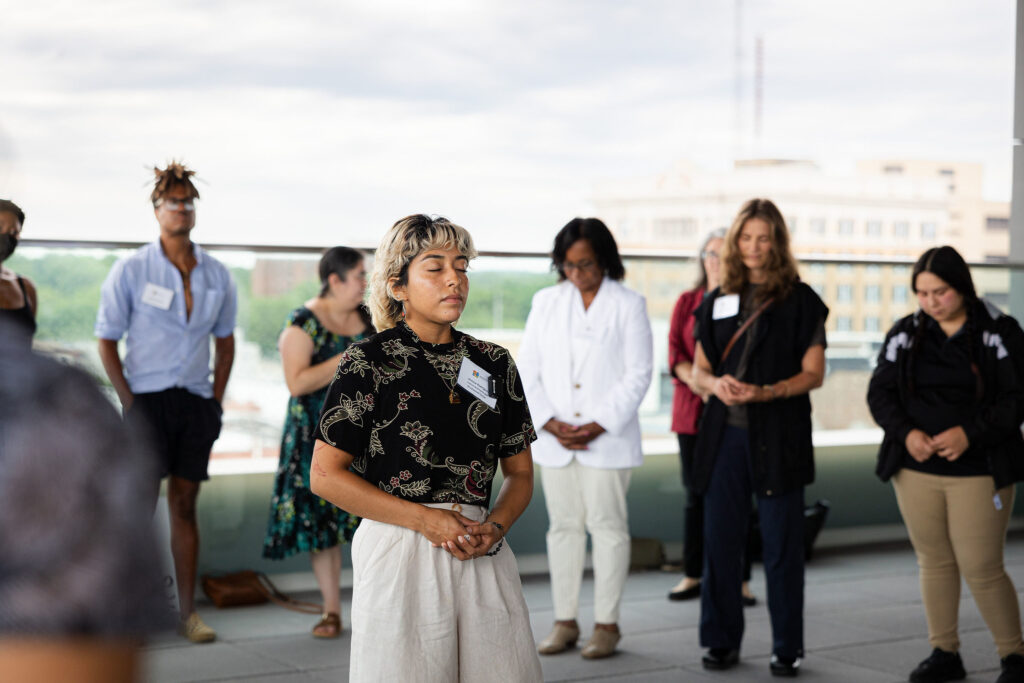
Jess Rodriguez leads a forest bathing activity at the 2024 Community Leadership Roundtable

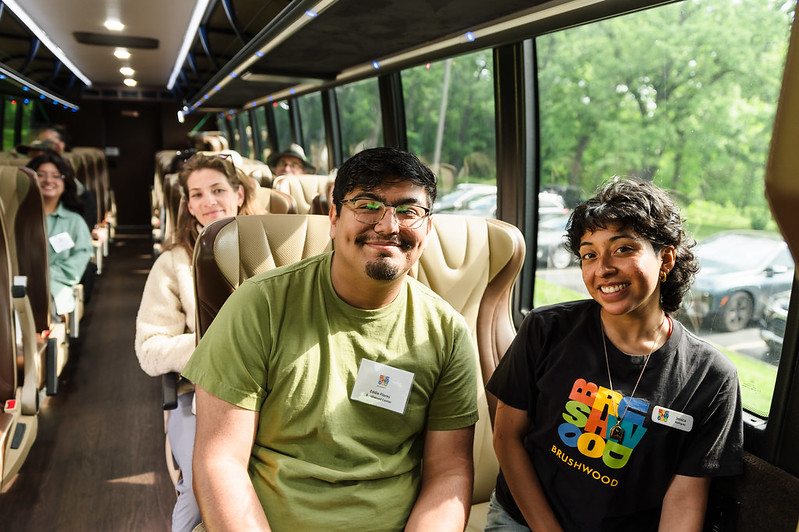
Based on feedback from the community leaders at the 2024 Roundtable, in 2025 Brushwood Center took our community into the field with two Environmental Justice and Healing Tours. Participants learned about the current state of environmental justice in Waukegan, visiting some of the most relevant sites of environmental damage and rehabilitation in the area.

Two people sitting at the front of a small tour bus, smiling.
Eddie Flores and Jess Rodriguez led two Environmental Justice and Healing Bus Tours

Driven by Data

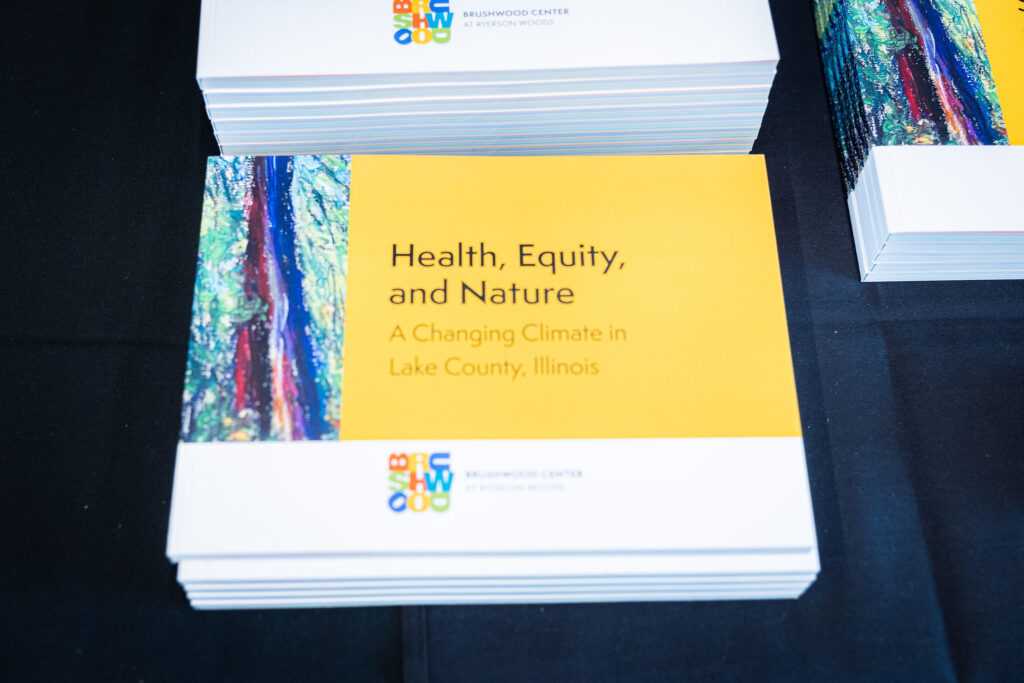
Community assets are one of the major highlights of Health, Equity, and Nature: A Changing Climate in Lake County, IL. This report, first released at the 2023 Leadership Roundtable, compiled public data sets, interviews with community members, original artwork, and GIS maps to tell the story of nature and health inequities in Lake County. While there were many interesting and frustrating findings within the report, the key message was clear: while our region has a wealth of green space and community assets, Northeast Lake County is overburdened by environmental racism and health injustices, including exposure to toxic industrial pollution, lower income, lower life expectancy, and increased respiratory and pulmonary disease risk.

Stacks of Health, Equity, and Nature: A Changing Climate in Lake County, IL
More than 3,000 people have engaged with the report data since it was published.


This report has had a profound impact on our work since its publication. We have shared the data with more than 3,000 people, distributing thousands of copies of the report in English and Spanish, providing over fifteen presentations to various organizations and stakeholders, and multiple artistic interpretations of the data, including our signature art exhibition and concert performance, Convergence. The community response has been humbling and overwhelming. We have heard from community members who felt seen and validated by the report, partners who have used the data in grant requests to leverage support for their work, and even faculty from Rosalind Franklin University incorporating the report into curriculum for first and third year medical students. But the work of the Health, Equity and Nature Accelerator does not end with the report– it is only the beginning.

Resilient Nature, Resilient Communities

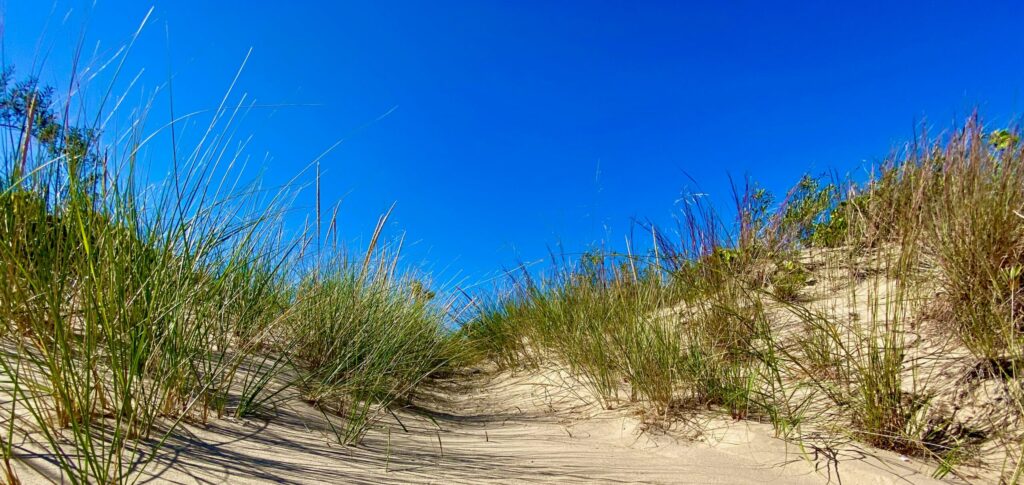
Grasses on a sand dune

By Megan Donahue

Earlier this spring, I was walking through the woods. It was one of those first perfect days–warm, but not too hot, the sky a brilliant blue. As I wandered along the paths, I noted the signs of spring migratory birds calling to each other, carpets of spring ephemeral wildflowers, the leaves just starting to emerge. Every year, spring feels like a miracle to me, and this year, especially. On both the macro and micro level, it had been a long winter.

I rounded a bend and saw a fallen tree. Not unusual– the winter winds take some out every year. What struck me was all the new growth sprouting out of it. Branches with bright yellow-green leaves were beginning to unfurl. I looked closer; there was just a small section of the trunk still connected to the roots. Apparently, that was enough to keep this tree going.

The metaphor was hard to miss.

Merriam Webster defines resilience as:

1: the capability of a strained body to recover its size and shape after deformation caused especially by compressive stress

2: an ability to recover from or adjust easily to misfortune or change

In tumultuous times, we know that cultivating resilience is important. When we are that strained body, we want to recover and adjust. Nature offers us many examples of resilience, from the fresh regrowth after forest fires to the dandelions that grow in the cracks in the sidewalk.

“To me, resilience means a way of grounding yourself, recovering. It’s a way of having a self-care plan. I think nature’s just wonderful because it’s so resilient. I mean, it don’t matter if it’s a storm, if it’s a flood, it’s a fire. It always finds a way to heal itself,” says Bruce Wright, founder of Nature’s Emporium in Waukegan.

Here in Lake County, there is a powerful story of resilience and recovery: The Waukegan Dunes.

Lessons from the Dunes

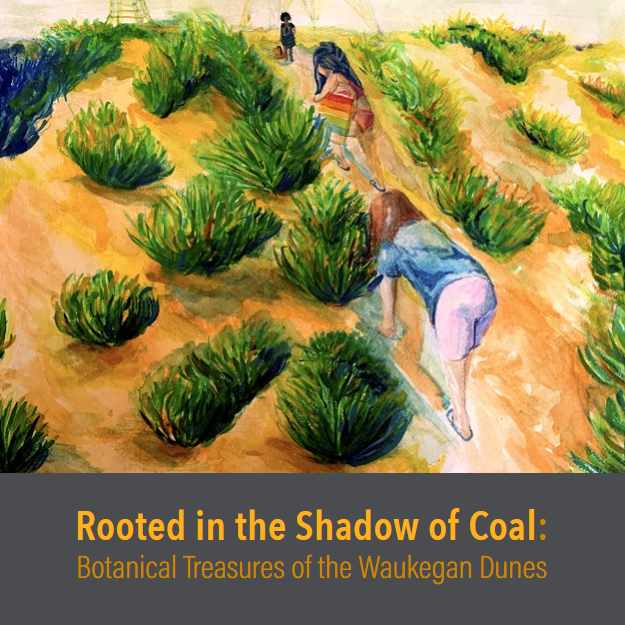
Rooted in the Shadow of Coal: Botanical Treasures of the Waukegan Dunes. Painting "Walking Up the Dune" by Josie Levin

ROOTED IN THE SHADOW OF COAL
This summer, Brushwood is exploring the resilience of this ecosystem in a new exhibition Rooted in the Shadow of Coal: Botanical Treasures of the Waukegan Dunes. In this exhibition, we celebrate the plants of the dunes, and also address the Dune’s environmental importance.

The natural environment along the Waukegan lakeshore is special. It includes a rare landscape of dunes, swales, bluffs, and ravines found in very few other places in the world. But the Waukegan Harbor and lakefront were long contaminated by over a century of industry. 

As Brushwood Center reported in the 2023 Health, Equity, and Nature: A Changing Climate in Lake County, Illinois (HEN report).

“Waukegan’s industrial pollution traces back to its development as a port city. In 1855, the economic future of the town seemed assured with the first train running through Waukegan connecting Chicago to Milwaukee. Waukegan Harbor was one of the busiest on the Great Lakes, and throughout the 1900s Waukegan continued to grow.

Throughout the twentieth century, the city grew as an industrial center with companies such as Abbott Laboratories, Outboard Marine Corporation, and Medline.”

The industrial activity resulted in a staggering amount of pollution, and today Waukegan is home to five Superfund sites (there are eight total in Lake County). Superfund sites are sites of environmental contamination that the Environmental Protection Agency (EPA) designates as significant hazards that must be cleaned up. It also requires the parties responsible for the contamination to either perform cleanups or reimburse the government for EPA-led cleanup work.

At the end of the 20th century, the Waukegan shoreline was overwhelmed with contamination. But with community action and advocacy, the Harbor and surrounding dunes were rehabilitated in an extraordinary way.

From the HEN Report:

…Fortunately, community action and advocacy has led to the continued remediation of these sites, and particularly in Waukegan Harbor. In 1990, the Waukegan Harbor Citizens Advisory Group (CAG) was formed by the Illinois Environmental Protection Agency (IEPA) to lead the development of a remedial action plan (RAP) for the Waukegan Harbor Area of Concern.

In 2013, the final environmental dredge of Waukegan Harbor was completed. As of August 2020, the Waukegan Area of Concern (AOC) has only one Beneficial Use Impairment (BUI) remaining: Restrictions on Fish and Wildlife Consumption. The Illinois Department of Natural Resources monitors polychlorinated biphenyls (PCB) levels in harbor fish.The CAG continues ‘to work with local, state and federal agencies to assure that the remaining contaminated sites located along the Waukegan lakefront are remediated and the remaining BUI is delisted and the AOC be declared an Area of Recovery.’”

“We say that humans have the least experience with how to live and thus the most to learn—we must look to our teachers among the other species for guidance. Their wisdom is apparent in the way that they live. They teach us by example. They’ve been on the earth far longer than we have been, and have had time to figure things out.”

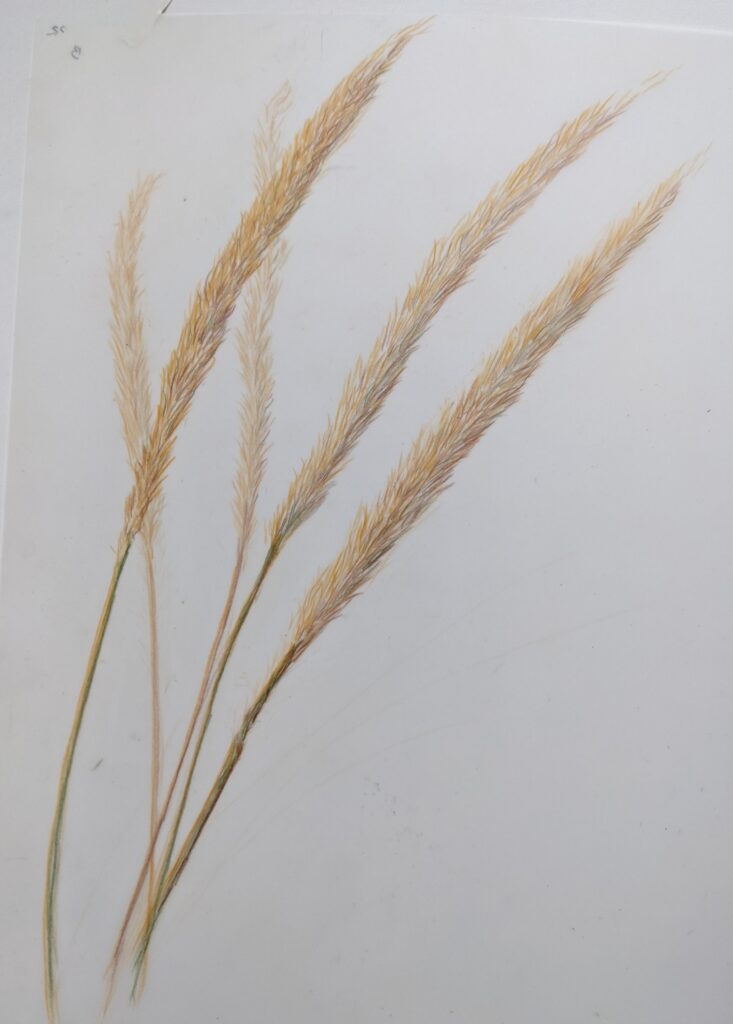
Beach Grasses, by Betty Schulte

With remediation, protection, new dune fences, and green infrastructure, the natural environment is making a big comeback. In a recent interview with the Chicago Tribune, Lisa May, Waukegan Lakefront Coordinator, talked about the nature on the shoreline re-emerging. “It was Mother Nature taking back her territory. Mother Nature does what she wants, and she always wins.”

The diverse native wildflowers and plants of the dunes have reemerged. Hundreds of plant species grow in what was once a heavily industrial area. This scrap of nature has survived and thrived thanks to community engagement.

Image: Beach Grasses, by Betty Schulte

Cultivating Resilience in Our Communities and Ourselves

“In the Western tradition there is a recognized hierarchy of beings, with, of course, the human being on top—the pinnacle of evolution, the darling of Creation—and the plants at the bottom. But in Native ways of knowing, human people are often referred to as ‘the younger brothers of Creation,’” wrote Robin Wall Kimmerer in Braiding Sweetgrass.

Image: Heart of the Dunes, by Sinead Carus

Jess Rodriguez, Brushwood’s Coalition Building Manager, is one of our resident experts on community and connectedness. Jess says, “A resilient community is one where you can feel safe and supported, one where you can offer support, knowing that your wellbeing is directly intertwined to the wellbeing of those directly around you.”

This practice doesn’t have to be complicated, Jess explains. “It may be as simple as saying good morning, learning someone’s name, and sharing a skill, resource, or new piece of information with someone. A resilient community starts with connection to what is within your reach and has the possibility of having a profound ripple effect.”

There’s a lot to learn from the Dunes about the power of community and the potential to reshape, reform, and recover. In spite of tremendous adversity, the revitalized Dunes show us what it looks like to make a comeback and celebrate the good things that remain. Similarly, as our communities face climate change, political strife, trauma, and uncertain times, we need each other to be resilient.

At first glance, my fallen tree looks like the story of a rugged individual, eking out its existence despite all the odds. But there’s a community at work there, too. The soil and sunlight are feeding the tree. Insects help pollinate it. Birds rest in its branches. That tree is not alone, and neither are we.

This story was first published in Thrive, Brushwood’s seasonal newsletter. It originally stated that the Waukegan Dunes “re-emerged.” Thanks to our friends at the Waukegan Harbor Citizens Advisory Group for clarifying that while a natural environment has re-emerged, the current dunal system formed in the late 20th century.