
Suicide Prevention: An Ecosystem for Staying
By Ashley Cullen-Williams, LPC
Please Note: This post discusses suicide. If you or someone you know is feeling overwhelmed, experiencing a mental health or substance use crisis, or having thoughts of suicide, call or text 988. No matter the situation, a trained Crisis Worker will listen, offer support, and help you navigate what comes next.
If you are exhausted, grieving, isolated, or overwhelmed, someone may have told you to “stay” as though staying were simple. But when you are carrying more pain than you know how to name, staying can feel like work.
September is Suicide Prevention Month
It is a time to talk about what many people have learned to carry quietly, and to remember that no one should have to carry it alone.
As a counselor, I have spent a lot of time thinking about what it means to ask someone to stay. Those words matter, but they are not a complete plan. Staying becomes more possible when someone has support, safety, and a reason to believe that the present moment is not the whole story.
Brushwood pointed me to nature. That’s the reason I keep thinking about the forest.
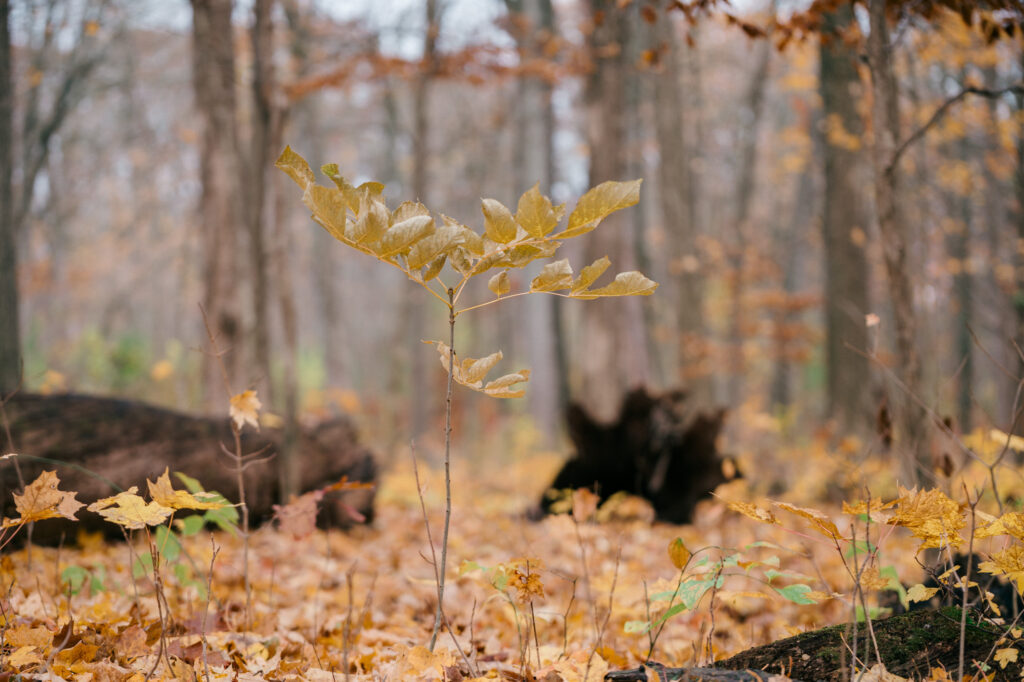
The forest knows difficult seasons. Trees lose their leaves. Branches break. Storms uproot what has stood for decades. There are months when the landscape looks empty, still, or lifeless. But the forest does not confuse a hard season with the end of a story.
Beneath the soil, roots remain connected.
Seeds wait. Fungi carry nutrients. Fallen trees become shelter and nourishment for something else. What we cannot see is often still working to keep something alive.
People need that kind of ecosystem too.
When Connection Feels Impossible
We often tell people who are struggling to reach out. Reaching out matters, but there are moments when even that feels impossible. You may not have the words, may not want to explain, or may not be ready to tell another person everything happening inside you.
The first connection does not have to begin with a conversation. It might begin by going outside.
Put your feet on the ground and notice that the earth is holding your weight without asking you to explain why you are heavy. Notice a tree and place your hand against its bark. Explore its texture, temperature, and places where it has been damaged yet continue growing.
Take a slow walk and notice five living things.
Sit long enough to hear what you normally walk past- the wind, birds, insects, leaves, water, distant traffic, or your own breathing.
Study a leaf, stone, pinecone or stick and let curiosity draw your attention beyond the thoughts demanding it.
When your mind feels loud ask:
What can I see, hear, or feel right now?
Where am I holding tension?
What would make the ten minutes safer?
Who or what could support my next move?
The goal is not to solve your whole life beneath a tree. It is to become grounded enough to take the next safe step.
Let Nature Hold You for a Moment
Nature does not require you to perform wellness.
The tree does not need you to be inspirational.
The trail does not ask whether you have been productive.
You can simply arrive and be.
Nature can offer grounding, quiet, movement and perspective, but we should not romanticize it.
A walk cannot fix everything.
Sometimes we need a counselor, medication, crisis support, community, rest, food, housing, advocacy and someone willing to sit besides us through the worst part of a moment.
The forest reminds us that nothing survives entirely on its own.
Roots connect underground.
Trees share space.
Water moves through systems.
An ecosystem participates in keeping life going.
Maybe we were never meant to carry everything alone.
What Prevention Can Look Like
Suicide prevention is not one conversation, hotline, or perfect response. It is the daily work of creating conditions where people feel seen, supported, and safe.
It can look like:
- Asking directly, “Are you thinking about suicide?” Asking does not plant the idea; it creates an opportunity for honesty
- Listening without rushing to fix, minimize, debate or offer quick reassurance.
- Taking someone seriously when they say they are struggling, even if they laugh, change the subject or say they are “fine.”
- Staying with someone who may be in immediate danger and helping reduce access to firearms, medications, weapons, or other lethal means.
- Connecting someone with a counselor, doctor, crisis team, trusted family member, or other qualified support.
- Learning warning signs, including hopelessness, feeling like a burden, withdrawal, sudden changes in mood or behavior, giving away possessions, saying goodbye, or talking about death.
- Creating spaces where people can discuss grief, trauma, identity, loneliness, substance use, financial stress, and other sources of pain without shame.
- Making practical support easier to access, including transportation, food, housing, health care, childcare, and community resources.
- Talking about mental health before there is a crisis and replacing judgment with curiosity.
Protection is built through connection: when people know who to call,where they can go, and what will happen next.
It is built when we make room for honesty before someone reaches a breaking point and we stop treating survival as an individual responsibility.
A Personal Note on History
There is a saying in Black communities: “Black people don’t hang themselves from trees.”
I want to be clear that I share this as my own reflection, not as position of Brushwood Center or as as statement about how Black people die by suicide.
For me, the saying reflects a historical mistrust of official accounts of Black death and the reality that racial violence has shaped how Black communities understand safety, death, and even our relationship with the outdoors. That history influences questions I carry, even as I understand as a counselor that Black people can and do experience suicide at alarming rates.
I include this because healing in nature does not require us to separate ourselves from history. We can acknowledge what the land has held while still creating new experiences of safety, connection, and restoration within it.
Before You Leave the Woods
Maybe the forest does not need to teach us how to survive.
Maybe we already know too much about surviving.
Maybe it can teach us something about living.
About resting without earning it.
About changing with the seasons.
About letting something fall away without believing everything is lost.
About allowing ourselves to experience joy even when there are parts of our story that still hurt.
And for the Veterans walking with us, maybe there is another lesson here: you are allowed to be okay. You are allowed to laugh, create, rest, explore, build new relationships, and discover who you are beyond what you have endured. Being okay does not erase what happened, dishonor who or what you lost, or make your service mean less.
For all of us, there will be seasons when staying feels heavier than others. In those seasons, I hope you remember what the forest shows us every day: life does not have to look the way it used to in order to still be life.
Stay. Rest. Reach. Create. Grow. And give yourself permission to see what comes next.