Help Brushwood close the final gap on ACTIVATE: A Campaign for Investment in Community!

Suicide Prevention: An Ecosystem for Staying

By Ashley Cullen-Williams, LPC

Please Note: This post discusses suicide. If you or someone you know is feeling overwhelmed, experiencing a mental health or substance use crisis, or having thoughts of suicide, call or text 988. No matter the situation, a trained Crisis Worker will listen, offer support, and help you navigate what comes next.

If you are exhausted, grieving, isolated, or overwhelmed, someone may have told you to “stay” as though staying were simple. But when you are carrying more pain than you know how to name, staying can feel like work. 

September is Suicide Prevention Month

It is a time to talk about what many people have learned to carry quietly, and to remember that no one should have to carry it alone. 

As a counselor, I have spent a lot of time thinking about what it means to ask someone to stay. Those words matter, but they are not a complete plan. Staying becomes more possible when someone has support, safety, and a reason to believe that the present moment is not the whole story. 

Brushwood pointed me to nature. That’s the reason I keep thinking about the forest. 

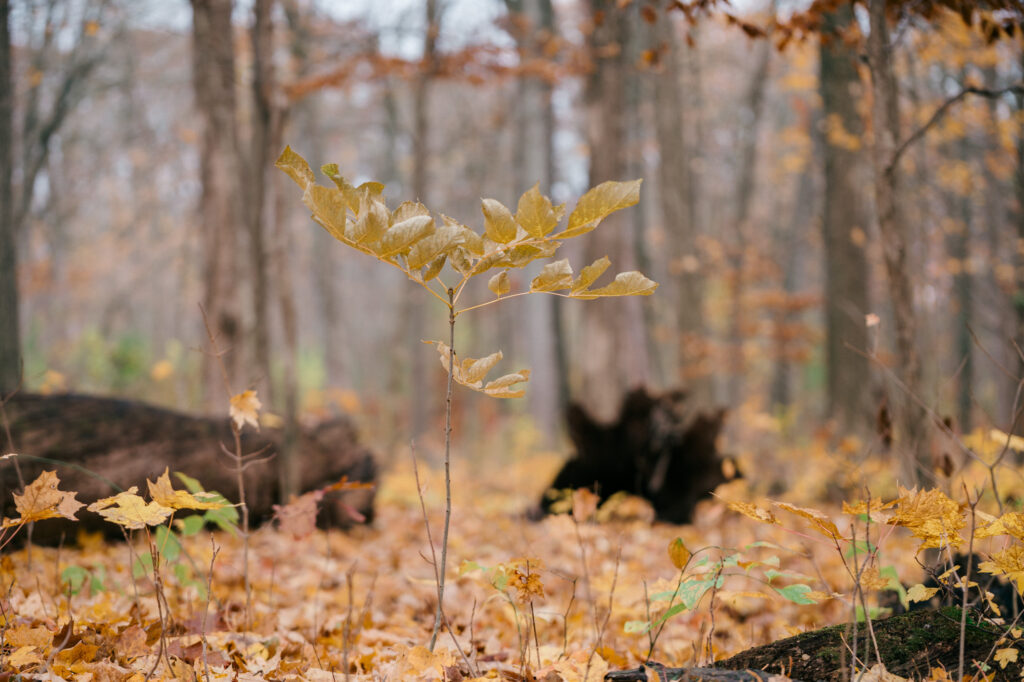
The forest knows difficult seasons. Trees lose their leaves. Branches break. Storms uproot what has stood for decades. There are months when the landscape looks empty, still, or lifeless. But the forest does not confuse a hard season with the end of a story. 

Beneath the soil, roots remain connected. 

Seeds wait. Fungi carry nutrients. Fallen trees become shelter and nourishment for something else. What we cannot see is often still working to keep something alive. 

People need that kind of ecosystem too. 
When Connection Feels Impossible 

We often tell people who are struggling to reach out. Reaching out matters, but there are moments when even that feels impossible. You may not have the words, may not want to explain, or may not be ready to tell another person everything happening inside you. 

The first connection does not have to begin with a conversation. It might begin by going outside. 

Put your feet on the ground and notice that the earth is holding your weight without asking you to explain why you are heavy. Notice a tree and place your hand against its bark. Explore its texture, temperature, and places where it has been damaged yet continue growing. 

Take a slow walk and notice five living things. 

Sit long enough to hear what you normally walk past- the wind, birds, insects, leaves, water, distant traffic, or your own breathing. 

Study a leaf, stone, pinecone or stick and let curiosity draw your attention beyond the thoughts demanding it. 

When your mind feels loud ask:

What can I see, hear, or feel right now?

Where am I holding tension?

What  would make the ten minutes safer?

Who or what could support my next move?

The goal is not to solve your whole life beneath a tree. It is to become grounded enough to take the next safe step. 

Let Nature Hold You for a Moment

Nature does not require you to perform wellness. 

The tree does not need you to be inspirational. 

The trail does not ask whether you have been productive. 

You can simply arrive and be. 

Nature can offer grounding, quiet, movement and perspective, but we should not romanticize it. 

A walk cannot fix everything. 

Sometimes we need a counselor, medication, crisis support, community, rest, food, housing, advocacy and someone willing to sit besides us through the worst part of a moment.

The forest reminds us that nothing survives entirely on its own. 

Roots connect underground. 

Trees share space. 

Water moves through systems. 

An ecosystem participates in keeping life going. 

Maybe we were never meant to carry everything alone. 
What Prevention Can Look Like

Suicide prevention is not one conversation, hotline, or perfect response. It is the daily work of creating conditions where people feel seen, supported, and safe. 

It can look like:

  • Asking directly, “Are you thinking about suicide?” Asking does not plant the idea; it creates an opportunity for honesty 
  • Listening without rushing to fix, minimize, debate or offer quick reassurance. 
  • Taking someone seriously when they say they are struggling, even if they laugh, change the subject or say they are “fine.”
  • Staying with someone who may be in immediate danger and helping reduce access to firearms, medications, weapons, or other lethal means. 
  • Connecting someone with a counselor, doctor, crisis team, trusted family member, or other qualified support. 
  • Learning warning signs, including hopelessness, feeling like a burden, withdrawal, sudden changes in mood or behavior, giving away possessions, saying goodbye, or talking about death. 
  • Creating spaces where people can discuss grief, trauma, identity, loneliness, substance use, financial stress, and other sources of pain without shame. 
  • Making practical support easier to access, including transportation, food, housing, health care, childcare, and community resources. 
  • Talking about mental health before there is a crisis and replacing judgment with curiosity. 

Protection is built through connection: when people know who to call,where they can go, and what will happen next. 

It is built when we make room for honesty before someone reaches a breaking point and we stop treating survival as an individual responsibility. 

A Personal Note on History

There is a saying in Black communities: “Black people don’t hang themselves from trees.” 

I want to be clear that I share this as my own reflection, not as position of Brushwood Center or as as statement about how Black people die by suicide. 

For me, the saying reflects a historical mistrust of official accounts of Black death and the reality that racial violence has shaped how Black communities understand safety, death, and even our relationship with the outdoors. That history influences questions I carry, even as I understand as a counselor that Black people can and do experience suicide at alarming rates. 

I include this because healing in nature does not require us to separate ourselves from history. We can acknowledge what the land has held while still creating new experiences of safety, connection, and restoration within it. 

Before You Leave the Woods 

Maybe the forest does not need to teach us how to survive. 

Maybe we already know too much about surviving. 

Maybe it can teach us something about living. 

About resting without earning it. 

About changing with the seasons. 

About letting something fall away without believing everything is lost. 

About allowing ourselves to experience joy even when there are parts of our story that still hurt. 

And for the Veterans walking with us, maybe there is another lesson here: you are allowed to be okay. You are allowed to laugh, create, rest, explore, build new relationships, and discover who you are beyond what you have endured. Being okay does not erase what happened, dishonor who or what you lost, or make your service mean less. 

For all of us, there will be seasons when staying feels heavier than others. In those seasons, I hope you remember what the forest shows us every day: life does not have to look the way it used to in order to still be life. 

Stay. Rest. Reach. Create. Grow. And give yourself permission to see what comes next. 
Health, Equity, and Nature

Community Health Workers: Connecting Lake County to Better Health

By Megan Donahue

You thought the medical practice accepted your insurance. They don’t.

The clinic is open on Wednesdays and Fridays, but the provider who speaks your language is only there every other week.

You might qualify for Medicaid, but applying on the website is confusing.

Accessing healthcare can be a challenge for many people in America. Additional barriers like finances,
transportation, language, education, and cultural differences can make it even more difficult. Systemic
racism and the historic abuse of some communities by the medical system adds yet another layer of complexity when seeking care.

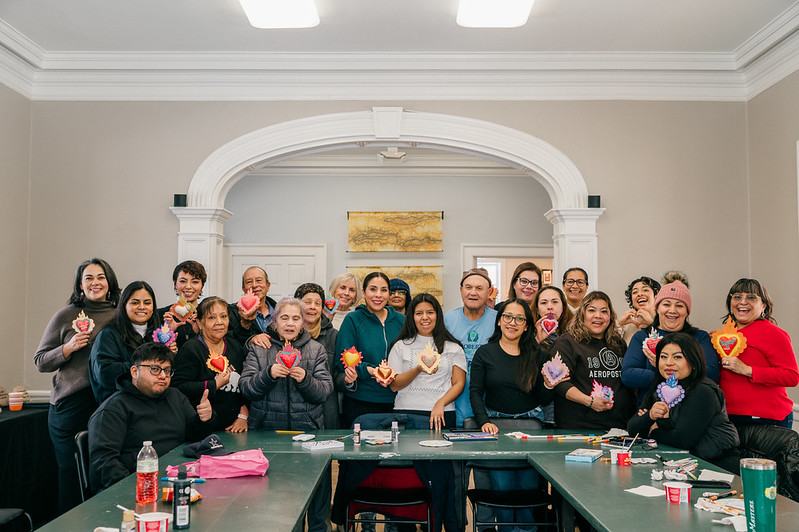
TIERRA art workshop participants from Highwood Library & Community Center and Roberti Community House

Tracey Smith of the Illinois Public Health Association (IPHA) saw the scale of the problem when she was working in healthcare in the early 2000’s. She noticed a major misalignment with complex patients, who were utilizing the emergency department often, but were missing out on other available resources.

The more she spoke with these patients, the more she realized that while they did need access to healthcare, “…they didn’t necessarily need what people were saying they needed, like another clinic on another corner closer to them. What they needed was help to get to those places, help to understand, help to be comfortable sitting in the doctor’s office, or finding a doctor that connected with them, and getting information to help providers provide the care needed.”

They needed a Community Health Worker.


What is a Community Health Worker?

The American Public Health Association defines a Community Health Worker (CHW) as: “a frontline public health worker who is a trusted member of and/or has an unusually close understanding of the community served. This trusting relationship enables the worker to serve as a liaison/link/intermediary between health/social services and the community to facilitate access to services and improve the quality and cultural competence of service delivery. A community health worker also builds individual and community capacity by increasing health knowledge and self-sufficiency through a range of activities, such as outreach, community education, informal counseling, social support, and advocacy.”

As Venoncia Bates-Ambrus, Executive Director of the Healthcare Foundation of Northern Lake County and a former CHW herself, explains, CHWs are different from other healthcare professionals. “As a community professional with expertise on community networks, community needs, community resources, challenges, barriers, and assets, they have all of that unique community-situated knowledge, or they develop it through the course of their work.” This expertise, and
the trusted role they hold within the community, makes it possible for the CHW to serve as liaison or ambassador,
connecting the community to healthcare.

While CHWs are most often found in healthcare and public health settings, a variety of organizations employ CHWs, including libraries, schools and more. Sometimes known as promotoras de salud, patient navigators, outreach workers, or peer health counselors, CHWs go by many titles, but all of them describe an important role in reducing health disparities.


What a Community Health Worker Does

The specific roles and responsibilities of a CHW vary depending on their community and organization, but Venoncia identifies two areas where CHWs are especially important: overcoming stigma and navigating access to
care.

“In certain cultures and communities, there may be a feeling of taboo,” she explains. “[CHWs] really help to address
barriers around accessing the healthcare because they address stigma, which can be associated with why people don’t actually ask for help or utilize resources when they’re available,” she says.

CHWs are also helpful partners in figuring out the available resources and explaining information.
“Organizations or sectors may have jargon, they may have different ways of communicating that aren’t always
understood by others outside of that sector,” says Venoncia. “So CHWs are uniquely situated to be able to transfer that knowledge back and forth between community and organizations.”

Andrea Barba is a Community Health Worker at Mano a Mano Family Resource Center in Round Lake. “What we
do is mainly education and outreach. We have a group of eleven promotoras, and we educate the community
with various health topics like cancer, diabetes, mental health. We mainly do preventative education,” she says.

The CHWs give presentations on health topics, and have a weekly live stream. “Every week we have a different guest to talk about a health topic or resource. We’re always trying to look for a way to reach as many people as we can to provide education and empower them.”

The community is an important part of Andrea’s life. “I’m an immigrant myself. When I saw Mano a Mano, I saw all the things that they were doing, and I always liked how the community, when I came here, embraced me. I really felt like I belonged to the community and I wanted to do something for them as well.” When she learned about the role of CHWs, it resonated with her.

“Something that came up a lot was being the bridge to fill the gap between the community, the people, and
the systems that don’t always include them. I wanted to do that to help people integrate and be a part of the
community.”

Next Steps for Community Health Workers in Illinois


Community Health Worker education and workforce development became the center of Tracey Smith’s career in public health. Once she learned about CHWs and saw the potential, she was committed to the model. “Many other countries have had community health workers at larger levels for a number of years, and we’d had it in the United States, but it would come and go in different decades and have different approaches, never well organized.”

She implemented a CHW program, then became very involved in Illinois Department of Public Health (IDPH) conversations about CHWs. Soon, she was connecting with other states that had CHWs, “it just kind of became a
snowball ripple after that,” she says.

Now, in her work at IPHA, Tracey is very focused on launching a state certification for CHWs, with a primary goal of enabling CHWs to bill Medicaid and Medicare in the state, potentially creating more stable funding for CHW work.

This work is necessary. As Tracey explains, “When we think about a continuum of health, I have different people I reach out to when I need some assistance. So many people don’t. But that’s where CHWs can fill so many spaces. They don’t have to be experts in the disease process, or anything else. It’s really about having someone to listen, to be able to connect, and when the route gets a little crooked or a little uncomfortable, being there to hold people up and to
continue down the process.”


Book Talk with Joel Greenberg

To Life: Jews Exploring Nature

By Megan Donahue

Brushwood Center is pleased to welcome friend, author, and former board member Joel Greenberg on August 1, 2026, to discuss his new book, To Life: Jews Exploring Nature. 

“This work is quite personal, as it reflects my Jewish heritage at birth and persistent passion for the natural world acquired a few years later,” says Joel. “There have been books on Jewish mobsters, athletes, and art historians but few on those who studied the various facets of natural history. There have certainly been Jews who have done so in the past and in the current world there are many.  But participation in natural history as a career or serious avocation was much less common.”

Joel has written several books on what he calls historical natural history, including Feathered River Across the Sky: The Passenger Pigeon’s Flight to Extinction, A Natural History of the Chicago Region, and Of Prairie, Woods, and Water. As he conducted his research, he found a striking lack of Jewish names.

The seeming absence of Jews in the world of natural history can be credited to many factors, from scriptural interpretation, medieval rabbinic scholarship, antisemitism in higher education, and patterns of settlement in America. Still, as you look closer at history, you’ll find that there were always Jewish people studying nature, even if not in great numbers. 

“This project took 10 years,” Joel says. “It took a year or two just to put together a list of names of potential people.” In the end, he created eight chapter-long biographies of Jews who studied aspects of natural history. 

“What I find really interesting are the people,” Joel says. His research brought him dramatic and interesting stories to tell about these fascinating characters, including: 

  • Philip Hershkovitz, who left the University of Michigan to explore Ecuador. “He wanted to go to the cheapest place he could in South America to study and collect neotropical mammals,” Joel explains. “He had no contacts. He did not know Spanish. He had almost no money, but he went.” Hershkovitz became a curator at the Field Museum, with an expertise in rodents. 
  • Libbie Hyman, who had graduated first in her high school class, and was working in a cereal factory putting stamps on boxes, when a former teacher pushed her to apply to the University of Chicago, where she was accepted. There, she studied botany, until an antisemitic lab manager forced her out of the program. She landed in zoology, where she became fascinated with invertebrates. Eventually, Hyman wrote a six-volume work on invertebrates, gaining worldwide recognition. When Joel visited Judith Winston, the premier authority on Libbie Hyman, she readily shared her research with him. Joel invited Winston to write the chapter.
  • Nathan Leopold, who is perhaps best known for murdering 12-year-old Bobby Franks, in collusion with partner Richard Loeb. “He’s my one bad apple,” says Joel.  Leopold’s contributions to ornithology are understandably overshadowed by his notorious crime and trial, but they are significant: as a young person, he was the first person to correlate the rarity of the Kirkland warbler with parasitism by brown-headed cowbird, arguably saving it from extinction; after his long prison sentence, he contributed to the knowledge of birds of Puerto Rico and the Virgin Islands. 

In addition to the Jewish connection, Joel’s research found a significant Chicago thread uniting his subjects as well. “Of the eight people that I write about in detail, four have strong connections with Chicago,” he says. 

Joel believes that learning about the Jewish naturalists of the past is relevant today. “Back in the day, there were fewer Jews involved in natural history than now. Now you might say it’s quite a few. However, there still are certain groups that are much better represented than others.” He points to a recent survey that showed that something like 85% of birders identify as non-Hispanic white. Diversity in natural spaces is still an issue. 

In addition, he hopes these interesting biographies draw more people, Jewish and non-Jewish alike, deeper into the science and adventure of natural history.  They’ve all made significant contributions to their fields,” he says of his subjects. He hopes that Jewish readers will learn more about a facet of Jewishness that they may not have been aware of. “And I think non-Jews would find the stories interesting,” he adds. 

If you want to learn more about these interesting stories, don’t miss Joel’s book talk at Brushwood. Books will be available for purchase and signing. 

Grounded Connections in Nature

Radical Hope in the Woods

Radical Hope in the Woods is a restorative, community-centered experience designed to reconnect the Black community to the land, to one another, and to the wisdom within. This event series invites participants to slow down, breathe deeply, and remember that healing is both personal and collective.

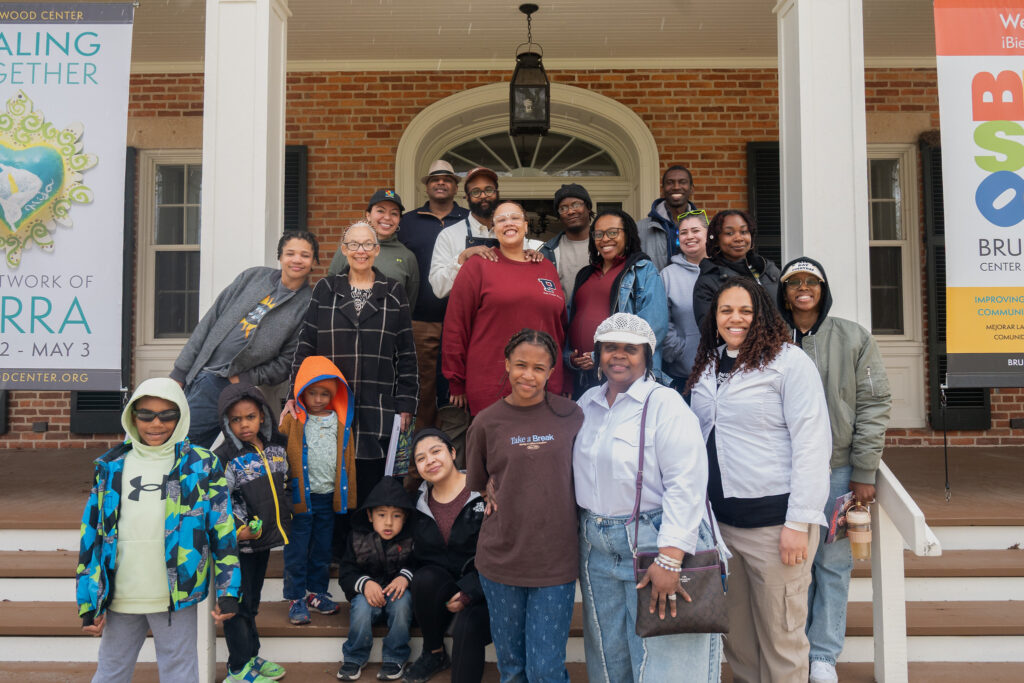
A group of smiling people on the steps of Brushwood Center at Ryerson Woods.

Developed and led by Ashley Cullen-Williams, Brushwood Center Senior Program Director, the event series premiered in the spring of 2026. The experience was woven like a quilt of memory. It featured virtual healing circles, folklore storytelling, and mindful walks that echoed the footsteps of the enslaved ancestors who moved through dense forests under moonlight, guided by stars, spirit, and unshakable will to be free.

“Through the honoring of slave narratives, freedom songs, and oral traditions passed hand to hand and voice to voice, the project bridged past and present- blending ancestral knowledge with contemporary practices of mindfulness and creative expression,” Ashley explains.

Participants gathered both online and beneath open skies to not only remember, but to feel: to sit with the land, honoring ancestral resilience, tending to generational wounds and reclaiming the outdoors as sacred ground for rest, remembrance, and radical hope.

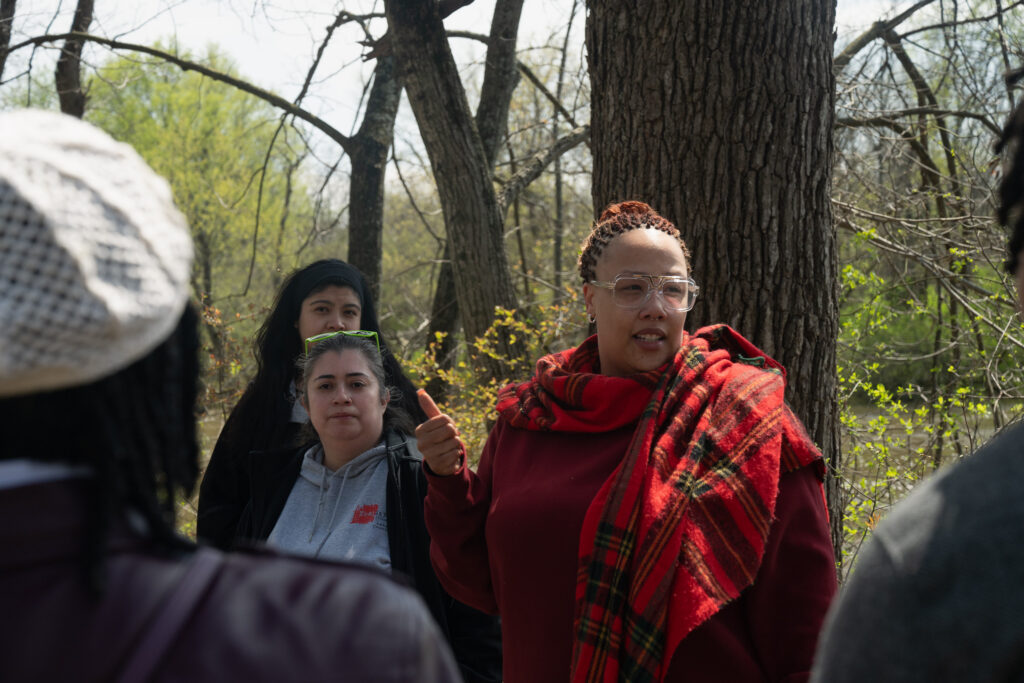
Ashley Cullen-Williams leads the group in the woods.
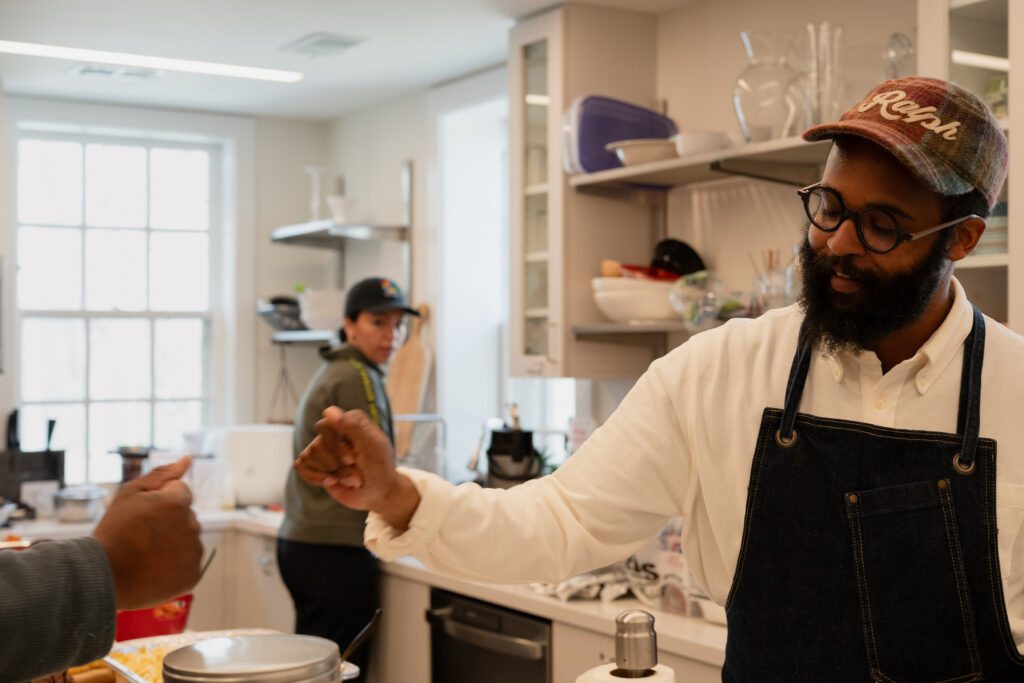
Chef Jeffrey Williams in the kitchen at Brushwood, fist-bumping a participant.
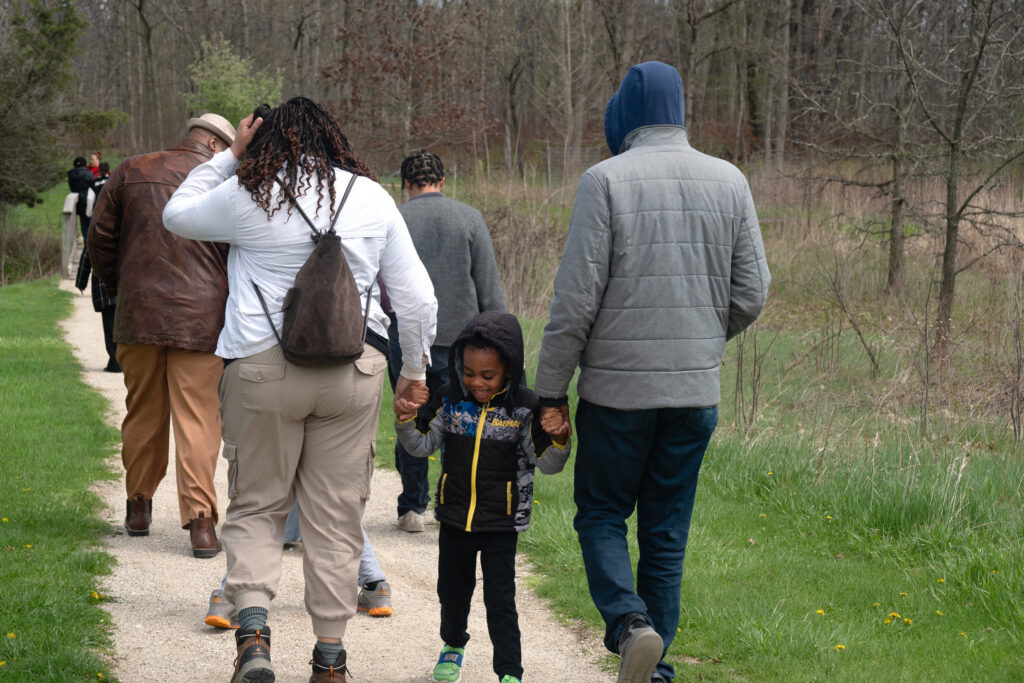
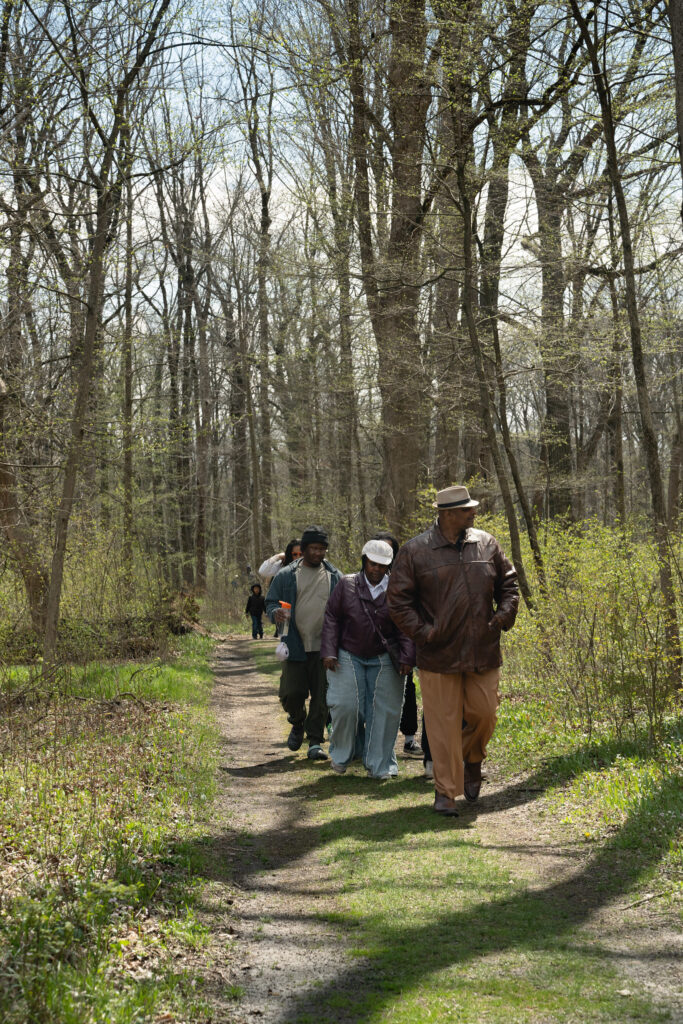
The group hikes at Ryerson Woods. A young child walks backwards between two adults.
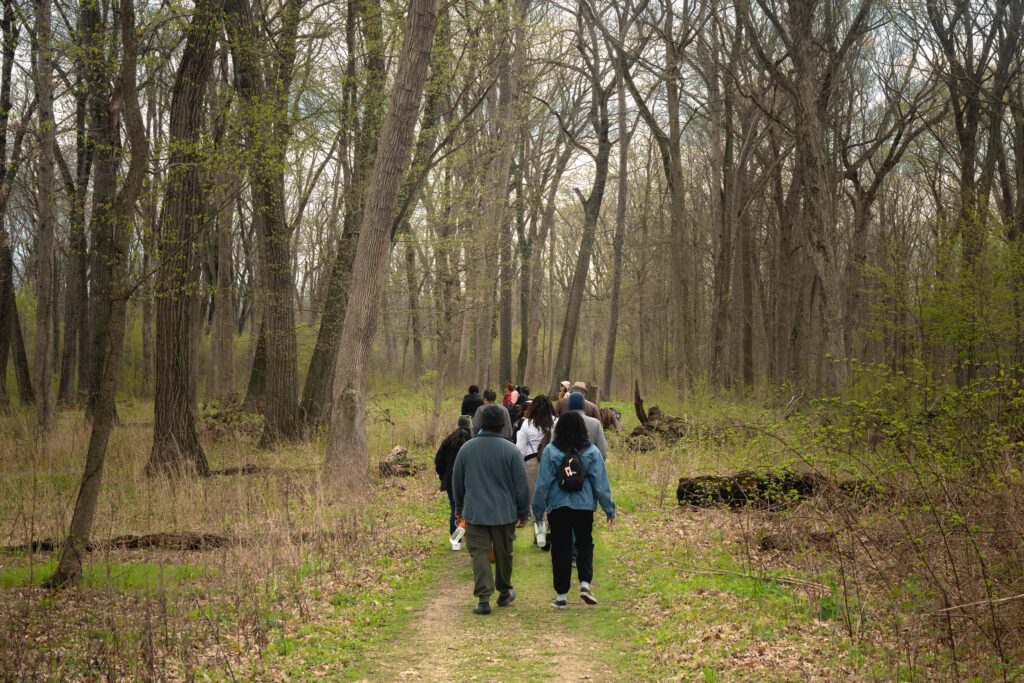
The group walks into Ryerson Woods in early spring.

“I wanted to bring more Black people outdoors- not just to visit, but to remember,” Ashley shared. “To rebuild our relationship with nature as something that has always been ours. Historically, the woods have held stories of fear- of being hunted, of running, of surviving. But those same woods also held strategy, protection, and possibility. At Brushwood, I was invited- pushed even- to step outside, to slow down, to regulate, to listen deeply. And in that listening, I was reminded that this connection belongs to me. It has always belonged to us.”

The group hikes in the woods together.

Radical Hope in the Woods is supported by Healing Illinois. Healing Illinois is a racial healing initiative of the Illinois Department of Human Services (IDHS) and the Field Foundation of Illinois.

NEW VIDEO

Nurturing Mental Health: The Power of Nature and the Arts

Nature and the arts are powerful contributors to your wellbeing.

Did you know that 1 in 5 adults in the US experience a mental health condition? The most common include anxiety, depression, trauma, and substance use disorders. Mental wellbeing is complex, but nature and the arts can play an important role in nurturing your mental health. Spending time in nature and creating art can reduce stress, anxiety, and depression, improve mood, and enhance positive emotions.

At Brushwood Center, we strive to improve access to nature and the arts, so that everyone can experience these benefits.

Happy Earth Day!

Earth Day Interview with Jess Rodriguez

By Healthcare Foundation of Northern Lake County

Our partners at the Healthcare Foundation of Northern Lake County recently featured an interview with Jess Rodriguez, Brushwood’s Coalition Building Manager, in their newsletter. That interview is republished with permission below. Thanks to the HFNLC for their collaboration!

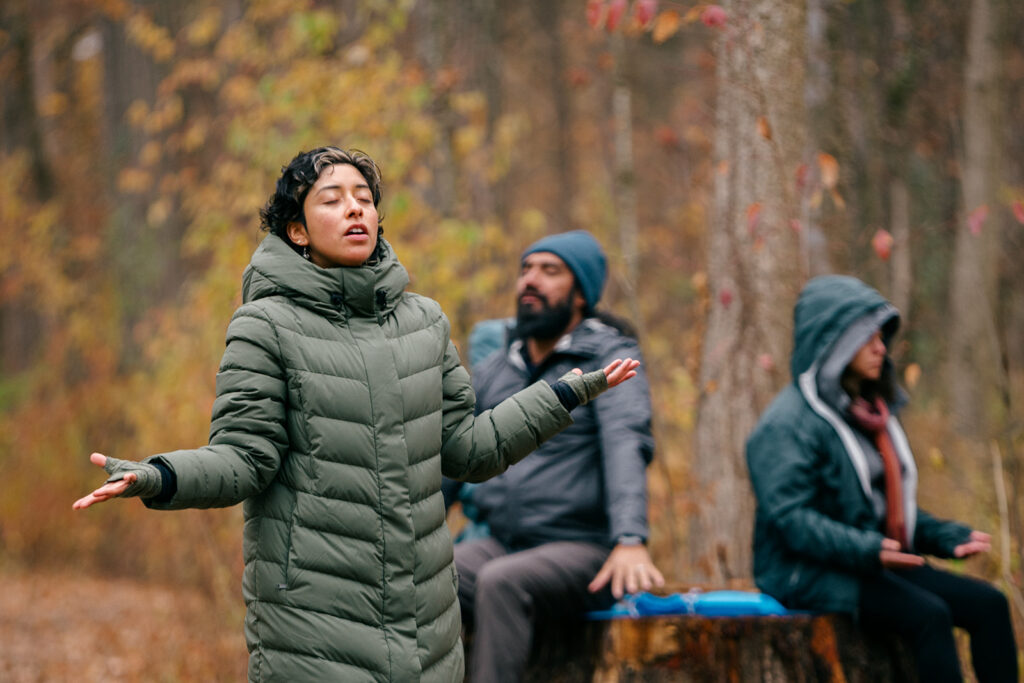
Jess Rodriguez leads forest bathing at Ryerson Woods. Their arms are extended, palms up, and their eyes are closed.

What brought you to your current work, or why did you feel the need to get involved?

I have always been drawn to nature. It has always called to me. I have been fortunate to have so many experiences, both for myself and with others, where being in nature has allowed us to unravel. To return to our own natural rhythms. Previous to my work at Brushwood, I was a horticulturist at the Chicago Botanic Garden. There, I noticed how my own mind and heart were able to sync up with nature’s way of knowing. I was able to see myself through the eyes of the trees, be called by the birds, and sing the songs of the flowers. I felt so alive and part of something much bigger than myself. My work there gave me all the proof I needed to understand that our connection to the earth is vital to our souls. I became involved with Brushwood’s work because I know that in a time where it may feel like we are constantly losing ourselves, our harmonious ways of being, bringing people back to their center can remind them of what it means to be human. To be one being amongst many. To see that the earth and all its inhabitants offer us all that we need to live and feel alive. 

What does Earth Day mean to you, your organization, and/or community, and how are you celebrating it?

Earth Day is timely with the arrival of Spring here in Lake County, IL. Spring is a time of emergence, a time to reach up towards the bright sky and stretch our limbs. Earth Day is a time to reconnect with all the beings that have been resting through the winter. To share our appreciation for one another and allow the warmth to creep into our bodies to energize us for what’s to come. Brushwood Center’s Earth Day will be spent celebrating all that we’ve accomplished with the Health, Equity, and Nature Accelerator and bringing our community in to continue dreaming of our collective future.

Why is it important to educate and involve the community, particularly the youth, in being good stewards of the environment, and how does your organization do this?

Everything we do to the environment around us is a reflection of what we do to ourselves. When we take care of our environment, we take care of ourselves. When we seek knowledge of our surrounding environment, we seek knowledge of ourselves. If we pollute the environment, we are polluting ourselves. How we do anything is how we do everything. It is important to involve the community in being good stewards of the environment because the land that we are on, wherever we are, is our home. Being a good steward of the land creates a strong sense of place for our community, which is important in feeling connection and a sense of community. Brushwood Center, in partnership with various organizations in Lake County, has created a nature-based mental health group intervention program that spans over the course of 8 weeks. This program, known as TIERRA, is focused on first offering participants an opportunity to develop a relationship to the land with the hopes that once participants come to care about the land they will then take care of it. Many participants thus far have stated that the program offered them many tools and strategies to connect with the land and that they have shared those tools with their children and spouses. Through TIERRA, we are seeing that participants are forming a strong sense of community through nature.

How is the health of the environment related to mental, physical, and community health (you can also add spiritual, social, and economic health if you’d like)? 

Everything is connected; it is the way of life. So much research has been done and is being done on how nature can help us mentally by providing us with less stress, depression, and anxiety through its ability to offer rest and relaxation. Moving our bodies through nature has been proven to offer us a boost in our immune system as we absorb the phytoncides from the trees, as well as improve our digestive system through simple movement. Nature is often viewed as being nonjudgmental, as the tree, plant, and animal beings treat each of us all the same and therefore can teach us how to treat each other. When we are in nature we might feel a sense of awe and inspiration, sparking a spiritual sense. With care and intention, nature offers an abundance of healing medicine at little to no cost. All of these combined would offer us as a society a shift in our collective health and healing.

What does environmental justice mean to you, and how are Black, Brown, and low income, communities disproportionately impacted? 

To me, environmental justice means that everyone would have access to nature as medicine and feel empowered to cultivate their gift that nature has offered each of us. Each of us, in relationship to the land, is able to harness great creativity and inspiration that makes us part of the whole. Black, Brown, and low-income communities have been forcibly and historically placed in polluted environments, thus creating an internalized sense of social pollution. Those of us who grew up with barriers to accessing nature or polluted environments may believe that nature is not for us or that nature is dirty/unsafe. This mindset that was forced upon us therefore diminishes our opportunity to cultivate our gifts. Instead of focusing on cultivating our gifts we are forced to fight for our survival and potentially lose sight of what our purpose on this earth is. We each have a right to allow the earth to speak through our hearts in unique and individual ways and that is why the fight for environmental justice is also the fight for the return of our souls.

Is there anything else that you would like to share? 

Wander into nature, leave behind your watch, and turn your technology off or on silent. Allow yourself to be immersed in whatever nature is around you for 15-20 minutes. Notice what is in motion. Notice what nature feels like with your fingertips. Notice what it smells like. Notice what it sounds like. Notice what you feel like. Keep noticing. Return to noticing nature as often as you can and all the ways that the earth is present in your life. Share what you notice with others. Allow nature to guide your heart, and allow your heart to move towards whatever it is truly called to.

Meet Catherine Tully

Catherine Tully is a cyanotype artist from Des Plaines, Illinois, whose visual language is deeply shaped by more than five decades in the world of ballet. Her lifelong engagement with movement, balance, and line informs her distinctive approach to botanical cyanotypes and wet cyanotype experimentation.

Tully’s work is grounded in an attentive dialogue with the natural world, using sunlight, water, plant materials, and other substances to explore themes of impermanence, fragility, ephemeral beauty, and ecological interconnection. Her prints are marked by a dancer’s sensitivity to form and structure, paired with a willingness to explore and embrace the unpredictability of organic processes.

She currently serves as the Artist in Residence at Friendship Park Conservatory.

.

See Catherine’s art on display at Brushwood Center at Ryerson Woods April 1 – 25, 2026.

Grasses, by Catherine Tully
Media: Wet cyanotype, print

Catherine’s Artist Statement

Queen Anne's Lace/ Wild Carrot, cyanotype by Catherine Tully

“Sine sole sileo. Without the sun, I am silent—a truth that guides both the making and meaning of my work. After spending over five
decades in ballet, I find my eye most drawn to the elegance of line and form, which nature generously provides in abundance. In my
traditional cyanotypes, I collaborate with sunshine and water to honor the delicate architecture of botanicals in Prussian blue and white.


In my wet cyanotypes, various hues drift and mingle, producing multicolored, experimental images that flirt with chaos—a reminder
that nature, and life, rarely stay neatly in place.


Each print is a quiet act of presence, a pause to honor the fragile, fleeting moments that often slip by unnoticed. Making art becomes
a conversation with the natural world—a way to witness its beauty, feel its impermanence, and recognize how deeply intertwined our
lives are with the environment around us. My work invites the eye to observe, contemplate, and consider the delicate interconnections
of the natural world, connecting with the tender poetry of life in all its ephemeral richness.”

Image: Queen Anne’s Lace/Wild Carrot, by Catherine Tully
Media: Traditional cyanotype, print

Artist of the Month Events

Artist Catherine Tully

April 25
10:00 am – 3:00 pm | Free
Open Art Workshop with Catherine Tully

Open Art Workshop is open to anyone who wants to make something in any area of visual arts and crafts, from the experienced artist looking for a community of others to work with, to the complete novice who just wants to try something out in a low pressure environment, or the family looking for a fun kids’ activity to fill their afternoon – this workshop is for you!

healing Together

The Artwork of TIERRA

By Jess Rodriguez

Transforming Internal Experiences for Resilience and Restoration through Acceptance (TIERRA) is the nature-based mental health intervention that was co-developed by Brushwood Center and DePaul University in collaboration with Highwood Library & Community Center, Roberti Community House, Mano a Mano Family Resource Center, Zacharias Sexual Abuse Center, Family First Center, and The HAP Foundation. Community Health Workers and Clinicians from these organizations have facilitated TIERRA to over 85 participants in Lake County from 2024-2025 and while we have received much feedback about the program, the most common piece of feedback we’ve received is that the participants want more TIERRA. 

Healing Together, the Artwork of TIERRA Three hand-painted milagros hearts

During TIERRA, participants were able to dive into themselves and remember who it is they truly are. In talking to participants, I could see that – without having even known them before-  a shift was happening. The tides were changing. What once may have been muddy waters were now clear calm waves reflecting the infinite blue of the sky. The possibilities of their world have broadened.

What each individual could see of themselves and for themselves matched that of what they noticed in nature: abundance, love, gratitude, beauty, peace, transformation. The participants of TIERRA saw nature reflect themselves, in every form and facet. The participants of TIERRA have done something remarkable, they cleared the muddy waters. They walked through the labyrinth of life, they journeyed inward, expanded, and journeyed back outward, expanding. They have rediscovered who they are and without fail, they have rediscovered the iridescent web of interconnectedness.

Which is why they asked for more TIERRA, I knew they were not asking for a second intervention per say but rather they craved more opportunities to spin with the web. 

Healing Together: The Artwork of TIERRA is an opportunity for the facilitators and participants of the program to move with that creative energy that they built up throughout the program and showcase their reflections through painting and other works of art. It has been an honor to collaborate with Nydia Gonzalez-Carson on these art workshops to offer facilitators and participants of TIERRA this moment, and hopefully create a ripple effect for more moments of grounding in the creative energy of nature for community healing.

Exhibition news

Rest and Recharge in Nature

By Megan Donahue

The world is noisy. In an environment saturated with constant alerts, urgent headlines, and an unrelenting stream of information, our nervous systems are rarely given time to settle. While some messages truly demand our immediate action, many linger as ambient noise, subtly shaping our thoughts, elevating stress, and eroding our capacity for presence and rest.

So what can we do about it?

Rest and Recharge: Practicing Radical Self Care in an Uncertain World is a new exhibition at Brushwood exploring this question. The exhibition acknowledges the quiet toll of the noise overload and offers a gentle counterbalance. Through visual art, space, and silence, Rest and Recharge creates an environment that encourages slowing down, tuning inward, and reconnecting with rhythms that sustain us rather than deplete us. 

Over forty artists are featured in the exhibition, exploring rest not as withdrawal or passivity, but as an active, necessary practice—one rooted in attention, care, and renewal.

Rest and Recharge

Rest is essential for humans to thrive. In addition to healthy sleep, downtime, and exercise, spending time in nature significantly reduces stress. A 2019 study found that just 20 minutes connecting with nature can help lower stress hormone levels. Research has shown “evidence that contact with nature is associated with increases in happiness, subjective well-being, positive affect, positive social interactions, and a sense of meaning and purpose in life, as well as decreases in mental distress.”


The artists of Rest and Recharge understand this vital link between nature and rejuvenation.

Artists Explore Nature as a Source of Calm

“Immersion in nature can bring peace and calm to otherwise anxious thoughts and feelings. When I walk through a garden or a forest or stand near a waterfall, I feel a connection and a feeling of belonging to something larger than myself. My awareness shifts. It helps me find perspective. The constant change and renewal inherent in nature reminds me that I am also changing and renewing in sometimes subtle, but significant ways. I can breathe a little deeper. My senses are awakened and I feel renewed. My paintings reference natural surroundings that metaphorically represent state of mind.”

–Joan Ackerman-Zimny

Image: Promise, by Joan Ackerman-Zimny
Media: Oil paint

Promise by Joan Ackerman-Zimny
Owl Feather by Margarete de Soleil

“I create works on paper drawn from my personal nature library, built through time spent outdoors and close observation. When a pinecone or stone, a bone or shell catches my attention, I experience a moment of discovery—an immediate sense of joy and quiet amazement that slows me down and invites presence. In an uncertain world, fear can easily dominate our inner lives. For me, returning to nature and to art is a way of resisting that pull. Joyful observation becomes grounding: studying color, texture, form, and cast shadow allows focus to replace anxiety. Each finished work feels like a small but meaningful victory—proof that attention, curiosity, and care still matter. Inspired by Claude Monet, who continued painting through World War I and described his work as ‘the only way I have of taking part in the victory,’ my own practice similarly chooses creation over fear. By sharing these moments of discovery, I hope the work offers steadiness and reassurance—a reminder that attention to the natural world can restore balance, clarity, and peace.”
–Margarete de Soleil

Image:Owl Feather, by Margarete de Soleil

Media: Ink and watercolor on Arches paper

“Being in natural surroundings is the ultimate way to rest and recharge. Getting away from computers, TV’s and other devices is balm for the over-stimulated mind. Challenge yourself by walking, sitting or even laying down to let wind, sun and temperature play their part in rejuvenating and elevating mind and spirit.”
-Carol Luc

Image: Get Lost, by Carol Luc
Media: Photo

Get Lost by Carol Luc


Rest and Recharge is on display at Brushwood Center at Ryerson Woods through April 5.

Meet Katherine Lampert

Katherine Lampert received a BFA from the Rhode Island School of Design and an MFA from Northwestern University. She has exhibited internationally, with a recent solo show at the Peggy Notebaert Nature Museum in Chicago. Lampert has been an Artist In Residence at the Cooper Union, a Community Artist In Residence at the Hyde Park Art Center, and received two fellowships from the Vermont Studio Center. She is also the recipient of a Full University Fellowship and a Teaching Fellowship from the Graduate School at Northwestern University, a City of Chicago Community Arts Assistance Program Grant, and a pARTners of Jackson Hole Grant. Her work has been featured in a number of publications, including the Chicago Tribune, Hyperallergic, and Michigan Avenue Magazine, among others.

See Katherine’s art on display at Brushwood Center at Ryerson Woods March 1 – 28, 2026.

Unstudied, by Katherine Lampert
Media: Oil based enamel on canvas

Katherine’s Artist Statement

“When I paint, I allow myself to get lost in the process. I welcome uncertainty, an antidote to the necessity of knowing and controlling so much in everyday life. Our experience is so often mediated by technology—filtered through screens, images, and digital representations. Painting forces me to slow down, take time to observe, and ultimately experience a more direct, unfiltered connection to the natural world.

My work is tactile, built from materials such as stained paper and translucent glazes of oil-based enamel. Through layering, scraping, and excavation, I create surfaces shaped as much by chance as by intention—echoing the natural forces that transform the environment. The resulting surfaces are meditative, evoking spaces that shift between the real and the imagined.”

Image: Katherine Lampert at work.

Artist of the Month Events

March 28
10:00 am – 3:00 pm | Free
Open Art Workshop with Katherine Lampert

Open Art Workshop is open to anyone who wants to make something in any area of visual arts and crafts, from the experienced artist looking for a community of others to work with, to the complete novice who just wants to try something out in a low pressure environment, or the family looking for a fun kids’ activity to fill their afternoon – this workshop is for you!

Image: Drift by Katherine Lampert
Media:Oil based enamel on canvas