
The Arts and Nature: Bringing Joy, Supporting Mental Health
By Megan Donahue
Picture a wash of blue watercolor paint spreading across a piece of thick paper. Imagine dipping your brush into a lush green, and layering the transparent color on top of the blue. It’s a sunny day, and the wind blows gently through the trees around you as you sit outside with your easel. You don’t have a goal, or any time pressure, or any assignment to make it “good” or “artistic.” It’s just you, the sun, the air, and the paint, exploring the possibilities.
How would that feel? Relaxing? Calm? Exciting?
Spending time in nature and experiencing the arts can influence your mood, emotions, and mental state, having a big impact on your overall wellbeing. The arts and nature bring joy to our lives, and they’re strong positive influences on our mental health.
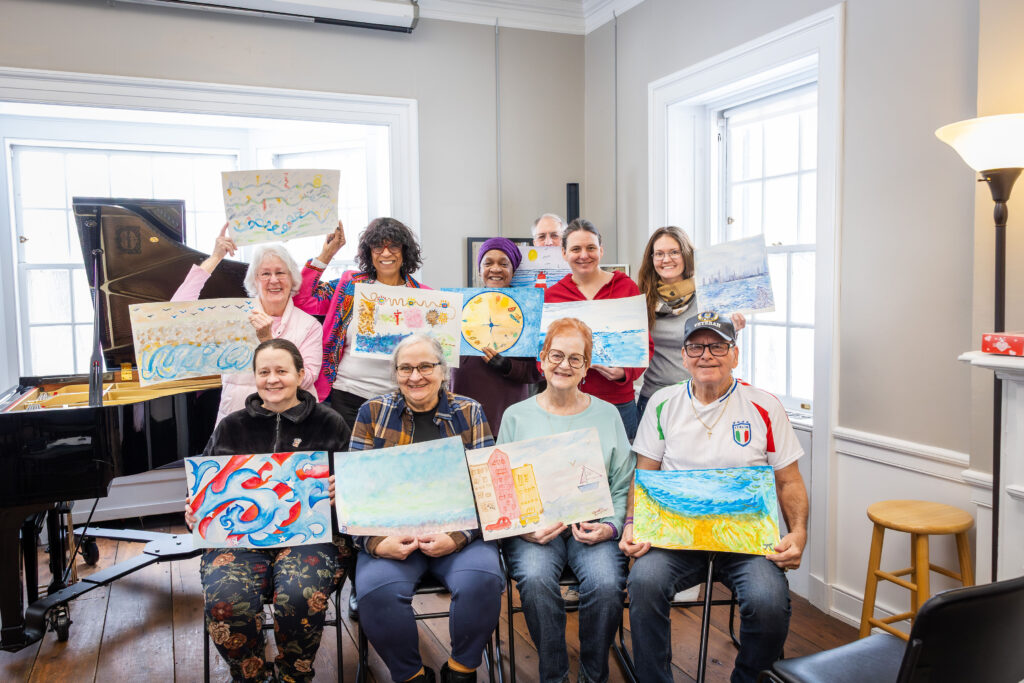
Mental Health Matters
1 in 5 adults in the US will experience a mental health condition in any given year, with anxiety disorders being
the most common, followed by substance use disorders, depressive disorders, and post-traumatic stress disorders.
Whether or not you experience mental illness, taking care of your mental health is important. Mental stress takes a toll on your physical health. Chronic stress is correlated with a myriad of negative physical outcomes, including digestive problems, heart disease, sleep issues, high blood pressure, and muscle tension.
Research continues to show that participating in the arts and spending time in nature can positively impact mental health. The time you spend outside, making, and/or viewing art is more than pleasant pass-time or distraction. It’s an important way to take care of your mental health.
Art is a Mental Health Asset
Making art, or even simply looking at it, can impact the brain. Increased levels of serotonin and more blood flow
to the pleasure-associated part of the brain are just some of the mental health benefits of art. Art is one of the ways
we find meaning in our lives, express and process emotion, and connect with each other.
Art has been a part of Jerry Loza’s life as long as he can remember. As a child, he had natural drawing talent and he continued to draw throughout his life. “Even in the Marines, I was making drawings for guys,” he says.
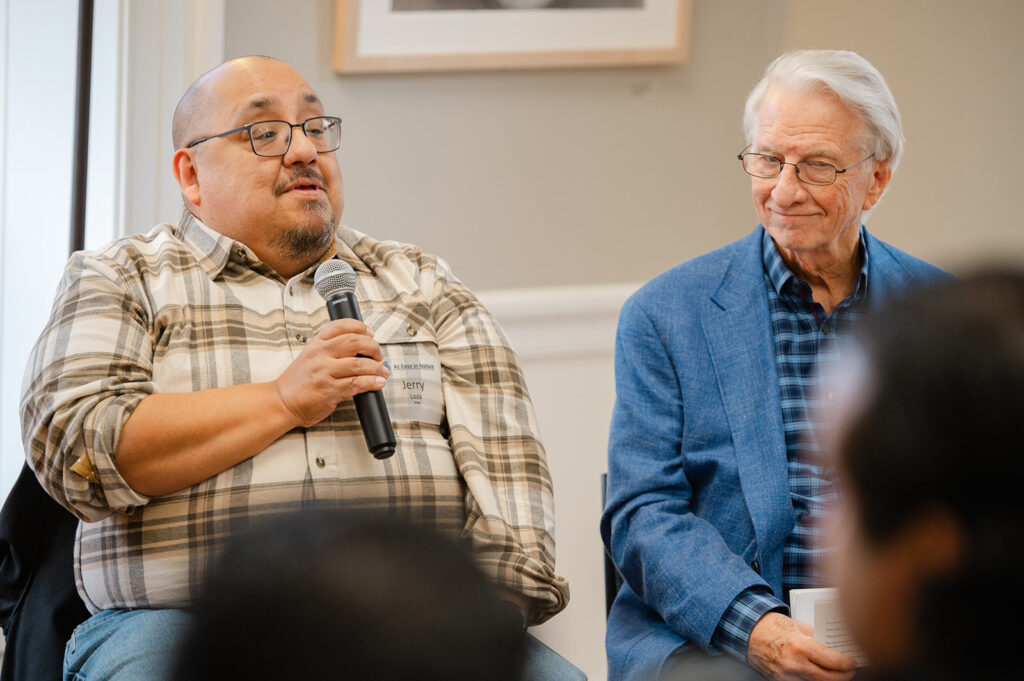
Drawing has become part of his mental wellness practice. “When I need to get away from reality, I can 100% focus
on my drawing,” he says. A digital artist, he draws using an app on his phone, whenever he needs to decompress and
manage stress. (You may recognize Jerry’s work from At Ease in Nature at Brushwood, where he’s exhibited his art with other Veterans and members of the Military community.)
Jerry served in the U.S. Marines from 1984-1988. “Joining the military was a hundred percent the right choice for
me. It was a great experience,” he says. “But as life progressed, things got heavier and messier, and I wasn’t dealing with anything. I was just filing it all away…I did this for many, many, many years until it was coming apart at
the seams.”
Jerry’s mental health was affecting his day-to-day life. “It was starting to trickle out,” he says. “I was getting short-
tempered. I was getting irate. I was not my usual self, even when I was my usual self. It was a thin veneer. It was
very obvious that it wasn’t the real me. I was just pretending.”
The breaking point came when Jerry’s boss directly asked him if he was okay. “And that was it. I shattered,” he says.
“It was just the most embarrassing in a way, but the most enlightening thing that I’ve ever been through because
right then and there I knew, okay, that’s it. I’m not okay.”
That conversation led to Jerry beginning a journey to improved mental health, which included talking to a
therapist, and sharing about his experiences with friends and family.
Art is also part of the healing journey. “I met the Veteran Art Tribe. They are just a phenomenal group. I had no idea this was even a thing. We were able to communicate and talk about pain, and everything else, and dealing with it through art.”
Addressing his mental health has improved Jerry’s life tremendously, as a person and an artist. “There’s so much more to my drawings in the past year. I leveled up, absolutely leveled up. I went much more in depth. I put more of myself into the paintings, because I’ve learned a lot about myself in the past year. I’ve learned more about meditation and calming myself and about dealing with anxiety and helping others deal with anxiety. I’ve learned a lot about myself and most of it I’m pretty content with. I am back, I’m me again.”
Nature Nurtures
The evidence continues to mount: nature experience is associated with psychological wellbeing. Time spent in nature promotes positive social interactions, happiness and sense of wellbeing, improved memory and attention, and decreases mental distress. Nature experiences are also associated with a reduction of risk factors and burden of some types of mental illness.
Sunlight, fresh air, and other experiences in nature can make a real difference in how you feel. A 2016 study
found that, “Natural elements and sunlight exposure related positively to job satisfaction and organizational commitment, and negatively to depressed mood and anxiety…Natural elements buffered the relationship between role stressors and job satisfaction, depressed mood, and anxiety.”
These mental health benefits are particularly important for young people, as mental health problems are
dramatically on the rise in children and teenagers. Elisa Cisernos, Senior Therapist at Lake County Health Department & Community Health Center, Child and Adolescent Behavioral Services, has seen this in action by partnering with Brushwood Center’s It’s A. W.I.N. program for youth. “In therapy, we try to talk about the importance of nature and art, but there’s only so far talking can get you until we bring kids to actually experience those things and practice what we talk about in therapy,” she says, “That’s where the true magic and power is. Coming to Brushwood is one of few times
where I actually see kids allow themselves to slow down with nature.”
Connect with Art and Nature
You don’t have to spend a lot of money or travel very far to get mental health benefits from making art or exploring nature. Sitting quietly on the lakeshore, taking a walk through the snow, playing an instrument, or coloring in a coloring book can get you started. When you think about taking care of your health, include your mind by giving yourself time outside and time with art.
This article originally appeared in Thrive, Brushwood Center’s print newsletter.